Who this route suits
5 days, 1100 kilometres, Turpan, Shanshan and Hami, Reversed. The route strings together Shanshan, Kumtag Desert, Desert Highway Sections, Tianshan Temple, Balikun Lake, Balikun Old Town without long days behind the wheel. Three to five hours a day, with one or two full days without moving, for couples or two or three friends who would rather unpack once and see a region properly.
How the foreign vehicle comes in
The Xinjiang gateway is Horgos on the Kazakh border. Foreign vehicles must be declared to customs by a licensed agency; private cars cannot clear on their own. The service fee is 6,000 to 9,000 CNY per vehicle, covering customs declaration, border formalities, the Chinese temporary driving permit, the temporary plate (valid three months), route filing and on-site handling at the port. The customs deposit is guaranteed by us, after which the owner pays 10,000 CNY, refunded in full three to five working days after leaving China. Documents are due 20 days ahead: passport, Chinese visa, driving licence, passport photo of the driver on a white background, vehicle registration, title, engine number, and front, rear and side photos of the car; vehicles over six years old also need a roadworthiness certificate.
Route overview
| Day | Leg | Distance | Main stops |
|---|---|---|---|
| 1 | Turpan—Hami | 420 km | Shanshan, Kumtag Desert, Desert Highway Sections |
| 2 | Hami—Barkol | 130 km | Tianshan Temple, Balikun Lake, Balikun Old Town |
| 3 | Barkol—Hami | 130 km | Balikun Grassland |
| 4 | Hami—Shanshan | 320 km | Kumtag Desert, Desert Highway Sections |
| 5 | Shanshan—Turpan | 100 km | Tuyugou Valley, Turpan Oasis |
Day by day
1 Turpan to Hami (420 km)
Shanshan. Shanshan sits in the east of the Turpan basin at the northern edge of the Kumtag Desert, the last proper town before the dunes on this route. It is a one-street place with rooms at one to two hundred yuan and cheap noodles, kebabs and pilaf; in July and August grapes and hami melons come in and are sold by the kilo at the roadside, almost too sweet. A few kilometres south is the desert park, west are Tuyugou and the Flaming Mountains, east the road to Hami. Fill the tank before leaving, since stations thin out eastwards. The town sits at six hundred metres and is hot in summer, so keep activity to the early and late hours.
Kumtag Desert. The Kumtag Desert begins a few kilometres south of Shanshan town, one of the very few dunes fields that runs straight into a city. The dunes move: one windy night reshapes the crest lines, and the sand is fine enough to run through your fingers. The desert park runs shuttle buses, sand-sledding and off-road rides; tickets with the bus are sixty to seventy yuan. Go in the hour before sunset, when the cross light separates the windward slope from the lee side. In summer the surface can reach sixty degrees at noon, so never walk barefoot. It is ten minutes by taxi from town; park at the gate and do not drive into the sand, where bogging down is routine.
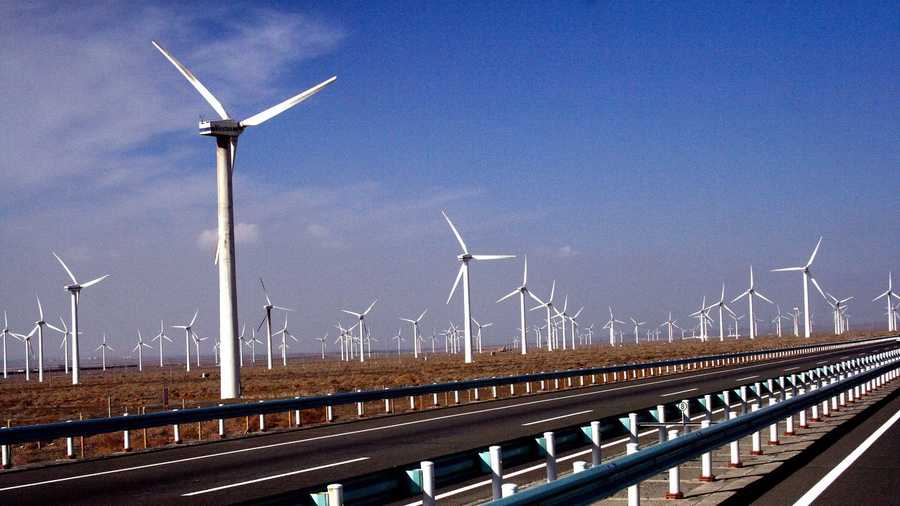
Desert Highway Sections. The Gobi in Xinjiang is less a landscape than a scale: hundreds of kilometres with no tree, water or settlement, a straight horizon and most of the frame given to sky. Prepare properly: fill up at half a tank, carry three litres of water per person per day, and avoid the two hottest midday hours. Mirage makes the road look wet. Dust storms cut visibility fast, so slow down or stop.
Road note: Four to six hours on the road. Start early, fill up at half a tank, and avoid the two hottest midday hours.
Eat: Grilled meat and pilaf under the grape trellises, around 50 CNY.
Sleep: Rooms 150 to 300 CNY, guesthouses in Grape Valley around 300 CNY.
Tip: The basin is extremely hot, so drive early and late and carry water.
This is day one of a foreign vehicle self-drive Xinjiang trip, so fill the tank before leaving town: stations sit further apart than they look on the map.
Today is the day to slow a foreign vehicle self-drive Xinjiang trip down: pull over wherever you can, since the best views sit beyond the lay-bys.
2 Hami to Barkol (130 km)
Tianshan Temple. A Qing dynasty temple on a pass in the Balikun mountains, honouring Ban Chao and Yue Zhongqi, small but well placed, with the whole Balikun grassland visible from the gate. Entry around 20 CNY, half an hour by road from the county town with a winding final climb. Pine forest behind the temple is cool in summer. The pass is windy, so keep hold of the car door.
Balikun Lake. A highland salt lake northwest of Balikun town, several dozen square kilometres of water ringed by salt flats and meadow, with migratory birds in summer and the eastern Tianshan snow behind. There is a boardwalk and platform, entry modest. At 1,600 m the wind is constant and the lake turns red at sunset. Salt flats are soft, so do not walk onto them. Twenty minutes from town.
Balikun Old Town. A Qing military town on the eastern Xinjiang frontier with its rammed-earth walls still standing for several kilometres, plus old lanes, a Dizang temple and a Niangniang temple. The wall walk is free and the brick carvings over the old doorways are worth a look. The town is small enough to cover on foot. Lamb stewed with pancake and local yoghurt are the specialties at 40 to 50 CNY per head.
Road note: Two or three hours of driving with service areas and towns in between, so there is no need to rush.
Eat: Noodles and grilled meat in the towns along the way, around 40 CNY.
Sleep: Rooms 150 to 300 CNY, book ahead in season.
Tip: Do not drive into the night; arrive an hour before dark.
For a foreign vehicle self-drive Xinjiang drive, today is the easiest road of the trip and the right place to get used to the limits.
Halfway round this foreign vehicle self-drive Xinjiang loop, check tyre pressure and washer fluid before the long legs ahead.
3 Barkol to Hami (130 km)
Balikun Grassland. A rare stretch of continuous grassland on the north slope of the eastern Tianshan, knee-high in summer, with herds on the slopes and a clear snow line behind. No ticket; pull off anywhere along the road. Stone figures from the Sui and Tang period stand in the grass near Lanzhou Wanzi and Shirenzi, weathered and easy to miss. Wind is strong and summer nights drop to 10 C.
Road note: Two or three hours of driving with service areas and towns in between, so there is no need to rush.
Eat: Noodles and grilled meat in the towns along the way, around 40 CNY.
Sleep: Rooms 150 to 300 CNY, book ahead in season.
Tip: Do not drive into the night; arrive an hour before dark.
On a foreign vehicle self-drive Xinjiang route, watch the gauge here; the next station can be two hundred kilometres on.
Back at the finish the foreign vehicle self-drive Xinjiang loop closes, so settle tomorrow's direction the night before.
4 Hami to Shanshan (320 km)
Kumtag Desert, second visit. Skip the full boardwalk this time and pick the section you missed; the light and the crowds will be different anyway.
Desert Highway Sections, second visit. Skip the full boardwalk this time and pick the section you missed; the light and the crowds will be different anyway.
Road note: Four to six hours on the road. Start early, fill up at half a tank, and avoid the two hottest midday hours.
Eat: Noodles, kebabs and pilaf in town, about 35 CNY a head; grapes and hami melons are sold by the kilo in July and August.
Sleep: Guesthouses in town run 120 to 220 CNY.
Tip: Avoid the midday sun and leave the dunes for the hour before sunset.
The second half of today is where a foreign vehicle self-drive Xinjiang journey gets careless: the road looks flat, but the bends hide behind rises.
5 Shanshan to Turpan (100 km)
Tuyugou Valley. Tuyugou is a dry, ochre valley cut into the southern flank of the Flaming Mountains, west of Shanshan. Inside it sits Mazar village, one of the oldest Uyghur settlements in Xinjiang, where flat-roofed earthen houses stack one above another and a few hundred families still live among them. At the mouth of the valley are the Tuyugou caves, more than forty Buddhist grottoes cut in the Gaochang period, their murals badly faded; they are a national heritage site and need a separate ticket and a guide. The red sandstone walls are unbearable at midday in summer, so go in the morning or late afternoon. Tickets run about forty yuan, with parking at the village gate and an hour from Turpan city.
Turpan Oasis. Turpan is a basin below sea level, bottoming out at minus 150 metres at Ayding Lake, ringed by the Flaming Mountains and gravel desert. Everything green here comes from karez channels carrying Tianshan meltwater: strips of vines, poplars and wheat between bare hills. Villages are built of yellow rammed earth, with drying sheds open on all sides where grapes hang until they turn to raisins. Summer reaches forty-five degrees, the ground burns and the streets empty at midday; people move at dawn and after sunset. The karez, Grape Valley, Jiaohe and Gaochang ruins all sit within half an hour to an hour. Urumqi is two hours away on the expressway, past the Daban Cheng wind gap.
Road note: Two or three hours of driving with service areas and towns in between, so there is no need to rush.
Eat: Grilled meat and pilaf under the grape trellises, around 50 CNY.
Sleep: Rooms 150 to 300 CNY, guesthouses in Grape Valley around 300 CNY.
Tip: The basin is extremely hot, so drive early and late and carry water.
By this stage of a foreign vehicle self-drive Xinjiang itinerary the car and the driver have settled in, which is exactly when people start pushing the speed.
Tickets and opening hours
| Site | Ticket | Hours |
|---|---|---|
| Shanshan | See ticket office | Check the gate on the day |
| Kumtag Desert | See ticket office | Check the gate on the day |
| Desert Highway Sections | See ticket office | Check the gate on the day |
| Tianshan Temple | See ticket office | Check the gate on the day |
| Balikun Lake | See ticket office | Check the gate on the day |
| Balikun Old Town | See ticket office | Check the gate on the day |
| Balikun Grassland | See ticket office | Check the gate on the day |
| Tuyugou Valley | See ticket office | Check the gate on the day |
| Turpan Oasis | See ticket office | Check the gate on the day |
Tickets and shuttle buses are priced separately and change with season and holidays, so confirm at the gate; guides, horses and boats are extra.
Six things to know on the road
- Foreign vehicles must be declared to customs by a licensed travel agency. Private cars cannot clear the border on their own; that is the procedure, not an option.
- The temporary plate is valid three months. Do not change the route filed at entry without re-filing it.
- Some frontier districts in Xinjiang need prior approval, and Xinjiang to Tibet cannot be crossed directly: you must go around via Golmud on the G109.
- Fuel is sold against ID, so keep the vehicle registration and licence within reach; stations can be 200 km apart.
- Speed limits differ sharply between expressway and national road, and average-speed cameras are everywhere, so slow down at every sign.
- At checkpoints, slow early and hand over passport, licence, registration and temporary plate together in one folder.
When to come
May to October is the reliable window, with June to September the easiest. From November the north sees snow and some passes close, while the south stays dry and bright.
How to extend it
The simplest extension is one more night at Shanshan, so the next day needs no driving and you can add a side valley or village. With two or three more days you could add a stretch towards Ili or Kanas; any change of route needs re-filing.
Contact and quote
This route can be adjusted to your dates, group size and vehicle. The quote covers customs declaration, temporary plate, route filing and port handling, and excludes fuel, tickets, rooms and meals. Send the port and date you plan to enter and we will confirm what is workable under the current rules.
WhatsApp: +86 13759155671 Email: [email protected]