Who this route suits
8 days, 1580 kilometres, The Classic Ili Loop, Reversed. The route strings together Dushanzi Grand Canyon, Duku Highway, North Section, Tianpu Waterfall, Gongnaisi Forestry District, Nalati Grassland, Dunna Expressway without long days behind the wheel. Three to five hours a day with several full stops, for travellers with enough holiday to spend an extra night where the light is good, and for owners who want to cover the north or the south in one run.
How the foreign vehicle comes in
The Xinjiang gateway is Horgos on the Kazakh border. Foreign vehicles must be declared to customs by a licensed agency; private cars cannot clear on their own. The service fee is 6,000 to 9,000 CNY per vehicle, covering customs declaration, border formalities, the Chinese temporary driving permit, the temporary plate (valid three months), route filing and on-site handling at the port. The customs deposit is guaranteed by us, after which the owner pays 10,000 CNY, refunded in full three to five working days after leaving China. Documents are due 20 days ahead: passport, Chinese visa, driving licence, passport photo of the driver on a white background, vehicle registration, title, engine number, and front, rear and side photos of the car; vehicles over six years old also need a roadworthiness certificate.
Route overview
| Day | Leg | Distance | Main stops |
|---|---|---|---|
| 1 | Urumqi—Dushanzi | 250 km | Dushanzi Grand Canyon |
| 2 | Dushanzi—Bayanbulak | 250 km | Duku Highway, North Section, Tianpu Waterfall |
| 3 | Bayanbulak—Nalati | 90 km | Gongnaisi Forestry District, Nalati Grassland |
| 4 | Nalati—Yining | 270 km | Gongnaisi Forestry District, Dunna Expressway |
| 5 | Yining—Sayram Lake | 150 km | Guozigou Bridge, Sayram Lake |
| 6 | Sayram stay | - | Sayram Lake, Dianjiangtai, Songshutou |
| 7 | Sayram Lake—Kuitun | 320 km | Jinghe, Kuitun and the G30 |
| 8 | Kuitun—Urumqi | 250 km | Shihezi, Kuitun and the G30 |
Day by day
1 Urumqi to Dushanzi (250 km)
Dushanzi Grand Canyon. About twenty kilometres south of Dushanzi town, the Kuitun River has cut a canyon over 100 m deep and tens of kilometres long through gravel deposits, leaving walls that look like a sliced thousand-layer cake. There is a glass platform and a boardwalk, entry a few dozen yuan. Late afternoon light shows the strata best. Keep well back from unrailed edges; the gravel is loose and gives way.
Road note: Two or three hours of driving with service areas and towns in between, so there is no need to rush.
Eat: Banmian and grilled meat, around 40 CNY.
Sleep: Rooms 150 to 300 CNY.
Tip: Check brakes, tyres and the spare before climbing the Duku highway.
This is day one of a foreign vehicle self-drive Xinjiang trip, so fill the tank before leaving town: stations sit further apart than they look on the map.
2 Dushanzi to Bayanbulak (250 km)
Duku Highway, North Section. From Dushanzi the road climbs into the Tianshan to the Hashilegen pass at 3,300 m, where snow walls several metres high can still line the road in June, the most dramatic stretch of the highway. It is narrow, steep and exposed, forty km/h limit, no trucks, rockfall after rain, and buses over eight seats are barred. Qiaoerma is the midpoint, with a war memorial and a checkpoint. A hundred-odd kilometres in about three hours.
Tianpu Waterfall. A thin waterfall dropping tens of metres down a rock wall near Qiaoerma on the northern Duku section, with a lay-by on the road and a walk of a few dozen metres. It runs fullest in July from meltwater and thins by September. At around 2,500 m it is cold standing still, and the rocks below are slippery, so stay off the wet stone. The lay-by holds three or four cars and fills quickly in season.
Road note: Two or three hours of driving with service areas and towns in between, so there is no need to rush.
Eat: Lamb and noodles dominate, around 70 to 90 CNY.
Sleep: Rooms 200 to 400 CNY and tight in season, so book a day ahead.
Tip: At 2,400 m nights drop to a few degrees, so bring a thick jacket for sunset.
For a foreign vehicle self-drive Xinjiang drive, today is the easiest road of the trip and the right place to get used to the limits.
3 Bayanbulak to Nalati (90 km)
Gongnaisi Forestry District. A mid-section stop on the Duku highway where Schrenk spruce crowds both sides of the Gongnaisi valley and the river turns white over rocks, with hot springs and farmhouse restaurants along the road. At around 1,800 m the valley runs ten degrees cooler than the plains in summer. Rooms are basic at 100 to 200 CNY and yurts can be rented. Signal drops in and out, so fill the tank before entering.
Nalati Grassland. A river-valley grassland on the north bank of the Gongnaisi at Ili, slopes running from the water to the snow line with spruce standing in clumps. Two shuttle routes, valley and sky meadow, each ticketed separately; entry ninety-five yuan, buses forty each way. The upper meadow sits at 2,200 m with wildflowers in June. Kazakh yurts in the reserve serve milk tea and hire horses at around 150 CNY an hour. Morning and evening light are best.
Road note: A short day on paved road, under an hour, with stops whenever you like.
Eat: Kazakh restaurants serve boiled lamb, horse sausage and yoghurt at around 70 CNY.
Sleep: Hotels 200 to 500 CNY in town, yurts 150 to 300 CNY inside the reserve.
Tip: Buy tickets and shuttle separately and take the first bus to avoid crowds.
On a foreign vehicle self-drive Xinjiang route, watch the gauge here; the next station can be two hundred kilometres on.
4 Nalati to Yining (270 km)
Gongnaisi Forestry District, second visit. Skip the full boardwalk this time and pick the section you missed; the light and the crowds will be different anyway.
Dunna Expressway. The Dunmazha to Nalati expressway is the artery of the Ili valley, running east along the Gongnaisi through forest and meadow, with many tunnels and a 100 km/h limit. September and October are the best colours. Service areas are sparse, so fill up in Yining or Xinyuan. Tunnel lighting is dim, so switch on headlights before entering and do not change lanes inside.
Road note: Two or three hours of driving with service areas and towns in between, so there is no need to rush.
Eat: Yining is known for pepper chicken, meatball soup and pilaf, around 50 CNY near Liuxing Street.
Sleep: Hotels 150 to 300 CNY, guesthouses near Kazanqi 200 to 400 CNY.
Tip: Parking downtown is tight, so leave the car and walk into the old quarter.
The second half of today is where a foreign vehicle self-drive Xinjiang journey gets careless: the road looks flat, but the bends hide behind rises.
5 Yining to Sayram Lake (150 km)
Guozigou Bridge. A cable-stayed bridge on the G30 spanning the Guozigou valley, with the deck more than 200 m above the floor and a main span of 700 m. Driving across takes seconds, but from the service-area platforms the towers and cables stand against spruce-covered slopes, the most spectacular piece of infrastructure on any Xinjiang highway. Platforms are free. Morning is backlit, afternoon frontlit. Never stop on the bridge itself.
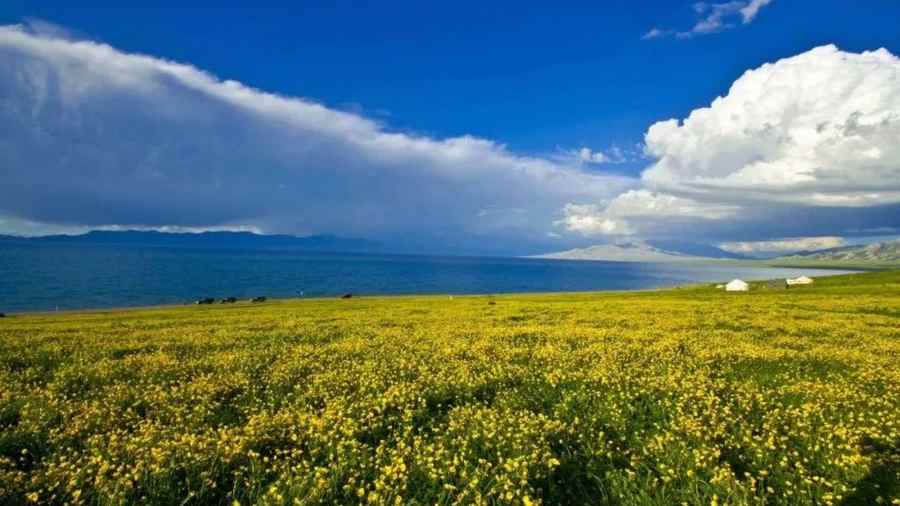
Sayram Lake. A highland lake at 2,070 m, the largest in Xinjiang at over 450 square kilometres, so blue it looks unreal, with stones visible several metres down on a clear day. The loop road runs ninety kilometres, two hours without stops, with a dozen lay-bys; Dianjiangtai, Songshutou and the west meadow each give a different angle. Entry is around 145 CNY including the loop. Wildflowers peak in June, grass in July, and after October the wind turns cold.
Road note: Two or three hours of driving with service areas and towns in between, so there is no need to rush.
Eat: Only lakeside restaurants and herders' yurts serving milk tea and boiled lamb, around 80 CNY.
Sleep: Guesthouses and yurts 200 to 600 CNY, or retreat to Jinghe for a 150 CNY room.
Tip: At over 2,000 m nights are cold and windy, so weight the tent and do not cook outdoors.
By this stage of a foreign vehicle self-drive Xinjiang itinerary the car and the driver have settled in, which is exactly when people start pushing the speed.
6 Sayram stay (no driving)
Sayram Lake, second visit. Skip the full boardwalk this time and pick the section you missed; the light and the crowds will be different anyway.
Dianjiangtai. A low platform on the west shore of Sayram, said to be where Genghis Khan reviewed his troops. Two minutes to walk up, and it faces the lake and the snow ridges on the east shore, which makes it the sunrise spot: the water goes from grey-blue to bright blue in about fifteen minutes. Wind is strong, so weight the tripod. Parking is small and fills early in season. At 2,100 m, move slowly.
Songshutou. A spruce-covered slope on the south shore of Sayram where the road passes through forest and the lake opens suddenly on your right, the most photographed bend on the loop. The lay-by holds a dozen cars and looks down on the curve of the bay with layered water colours. At over 2,100 m the wind off the water is cold. Morning and midday light work best here; do not block the running lane, trucks are frequent.
Road note: No driving today. Leave the car at the guesthouse and walk or take a taxi into the old town and the reserve.
Eat: Noodles and grilled meat in the towns along the way, around 40 CNY.
Sleep: Rooms 150 to 300 CNY, book ahead in season.
Tip: Do not drive into the night; arrive an hour before dark.
Today is the day to slow a foreign vehicle self-drive Xinjiang trip down: pull over wherever you can, since the best views sit beyond the lay-bys.
7 Sayram Lake to Kuitun (320 km)
Jinghe. Jinghe is a small county town on the northern approach to Sayram Lake, the last place with fuel, rooms and a proper meal before the lake and the mountains. It sits on the old highway between Kuitun and Bole, with a wide main street, cheap noodles and barbecue, and rooms at 120 to 250 CNY. From town the lake is about an hour uphill, and the road climbs steadily with trucks, so leave early if you want the morning light on the water. Nothing here is a sight in itself, but it breaks a long drive and keeps you off the pass after dark.
Kuitun and the G30. Kuitun is the crossroads of northern Xinjiang: the G30 expressway and National Road 217 meet here, splitting west to Sayram, south over the Duku highway and north to Karamay. Services are complete and fuel stations plentiful. The G30 stretch is four-lane, 120 km/h, with heavy truck traffic, so overtake decisively. Service areas come every fifty or sixty kilometres, and rooms start around 150 CNY.
Road note: Four to six hours on the road. Start early, fill up at half a tank, and avoid the two hottest midday hours.
Eat: Banmian, grilled lamb and meatball soup, around 40 CNY.
Sleep: Rooms 150 to 300 CNY, fuel stations everywhere.
Tip: Kuitun is the crossroads of northern Xinjiang, so watch the signs.
Halfway round this foreign vehicle self-drive Xinjiang loop, check tyre pressure and washer fluid before the long legs ahead.
8 Kuitun to Urumqi (250 km)
Shihezi. A Bingtuan city laid out on straight streets with more trees than most of Xinjiang, and a free Reclamation Museum that explains the military-farm history in half an hour. Hotels are clean from around 200 CNY and food is easy. It sits 150 km from Urumqi on expressway, which makes it a comfortable halfway stop. Speed cameras are dense inside the city.
Kuitun and the G30, second visit. Skip the full boardwalk this time and pick the section you missed; the light and the crowds will be different anyway.
Road note: Two or three hours of driving with service areas and towns in between, so there is no need to rush.
Eat: Urumqi has the widest choice of restaurants in Xinjiang, from banmian noodles to big-plate chicken, around 50 CNY per person.
Sleep: Hotels run 150 to 500 CNY with easy parking.
Tip: Rush hour is heavy; fill the tank before leaving the city.
Back at the finish the foreign vehicle self-drive Xinjiang loop closes, so settle tomorrow's direction the night before.
Tickets and opening hours
| Site | Ticket | Hours |
|---|---|---|
| Dushanzi Grand Canyon | See ticket office | Check the gate on the day |
| Duku Highway, North Section | See ticket office | Check the gate on the day |
| Tianpu Waterfall | See ticket office | Check the gate on the day |
| Gongnaisi Forestry District | See ticket office | Check the gate on the day |
| Nalati Grassland | See ticket office | Check the gate on the day |
| Dunna Expressway | See ticket office | Check the gate on the day |
| Guozigou Bridge | See ticket office | Check the gate on the day |
| Sayram Lake | See ticket office | Check the gate on the day |
| Dianjiangtai | See ticket office | Check the gate on the day |
| Songshutou | See ticket office | Check the gate on the day |
| Jinghe | See ticket office | Check the gate on the day |
| Kuitun and the G30 | See ticket office | Check the gate on the day |
| Shihezi | See ticket office | Check the gate on the day |
Tickets and shuttle buses are priced separately and change with season and holidays, so confirm at the gate; guides, horses and boats are extra.
Six things to know on the road
- Foreign vehicles must be declared to customs by a licensed travel agency. Private cars cannot clear the border on their own; that is the procedure, not an option.
- The temporary plate is valid three months. Do not change the route filed at entry without re-filing it.
- Some frontier districts in Xinjiang need prior approval, and Xinjiang to Tibet cannot be crossed directly: you must go around via Golmud on the G109.
- Fuel is sold against ID, so keep the vehicle registration and licence within reach; stations can be 200 km apart.
- Speed limits differ sharply between expressway and national road, and average-speed cameras are everywhere, so slow down at every sign.
- At checkpoints, slow early and hand over passport, licence, registration and temporary plate together in one folder.
When to come
The Ili loop is best from June to July: wildflowers at Sayram, the greenest grass on Kalajun, rapeseed in Zhaosu in July and August. From late August the grass fades; September is settled but dry-looking. The Duku highway normally opens mid-June to early October, depending on the year's snow clearance.
How to extend it
The simplest extension is one more night at Dushanzi Grand Canyon, so the next day needs no driving and you can add a side valley or village. You can also link this to the other half of the Duku highway, or exit at Horgos into Kazakhstan, though both need a new route filing, so tell us in advance.
Contact and quote
This route can be adjusted to your dates, group size and vehicle. The quote covers customs declaration, temporary plate, route filing and port handling, and excludes fuel, tickets, rooms and meals. Send the port and date you plan to enter and we will confirm what is workable under the current rules.
WhatsApp: +86 13759155671 Email: [email protected]