Who this route suits
8 days and 1,660 kilometres through Dushanzi Grand Canyon, Duku Highway, North Section, riding on the sky grassland, Grassland Sections. Eight days run the whole Duku Highway from Dushanzi over the passes to Kuqa, with a spare day on the Nalati grassland so the middle of the trip is not a blur. Fuel, hotels and supplies are laid out day by day below, and the pace can be adjusted to your own energy.
How the foreign vehicle comes in
The Xinjiang gateway is Horgos on the Kazakh border. Foreign vehicles must be declared to customs by a licensed agency; private cars cannot clear on their own. The service fee is 6,000 to 9,000 CNY per vehicle, covering customs declaration, border formalities, the Chinese temporary driving permit, the temporary plate (valid three months), route filing and on-site handling at the port. The customs deposit is guaranteed by us, after which the owner pays 10,000 CNY, refunded in full three to five working days after leaving China. Documents are due 20 days ahead: passport, Chinese visa, driving licence, passport photo of the driver on a white background, vehicle registration, title, engine number, and front, rear and side photos of the car; vehicles over six years old also need a roadworthiness certificate.
Route overview
The route runs 1,660 kilometres in 8 days, 207 kilometres a day on average, with 7 driving days and 1 stay days. It starts and ends in Urumqi, and the daily stages and main stops are listed below.
| Day | Stage | KM | Main stops |
|---|---|---|---|
| 1 | Urumqi → Dushanzi | 250 km | Dushanzi Grand Canyon |
| 2 | Dushanzi → Nalati | 220 km | Duku Highway, North Section |
| 3 | Nalati, stay day | 0 km | riding on the sky grassland, Grassland Sections, Gongnaisi valley |
| 4 | Nalati → Bayanbulak | 90 km | the southern Duku, Gongnaisi Forestry District, Wet Meadows |
| 5 | Bayanbulak → Kuqa | 260 km | Duku Highway, South Section, Big and Small Dragon Pools |
| 6 | Kuqa → Korla | 280 km | Luntai Poplar Forest, Tarim River, Lunnan Oil Base |
| 7 | Korla → Turpan | 370 km | Gan gorge, Ganhou and Toksun |
| 8 | Turpan → Urumqi | 190 km | The Dabancheng Wind Gap, Yanhu Salt Flats |
Day by day
1 Urumqi → Dushanzi (250 km)
Dushanzi Grand Canyon.About twenty kilometres south of Dushanzi town, the Kuitun River has cut a canyon over 100 m deep and tens of kilometres long through gravel deposits, leaving walls that look like a sliced thousand-layer cake. There is a glass platform and a boardwalk, entry a few dozen yuan. Late afternoon light shows the strata strong. Keep well back from unrailed edges; the gravel is loose and gives way. The rock reads well in the hour before sunset; at midday the colour washes out. The viewing platforms are spread out, so allow two hours for the full walk or keep to the main platform if time is short.
Road note:Two or three hours of driving with service areas and towns in between, so there is no need to rush.
Eat:Urumqi has the widest choice of restaurants in Xinjiang, from banmian noodles to big-plate chicken, around 50 CNY per person.
Sleep:Yuli county hotels 130 to 250 CNY; a riverside guesthouse around 200 CNY.
Tip:Mosquito repellent at dusk in summer; in October, a jacket for the evening.
These are the first days of a foreign-vehicle run in Xinjiang, so fill the tank before leaving town; stations are further apart than they look.
2 Dushanzi → Nalati (220 km)
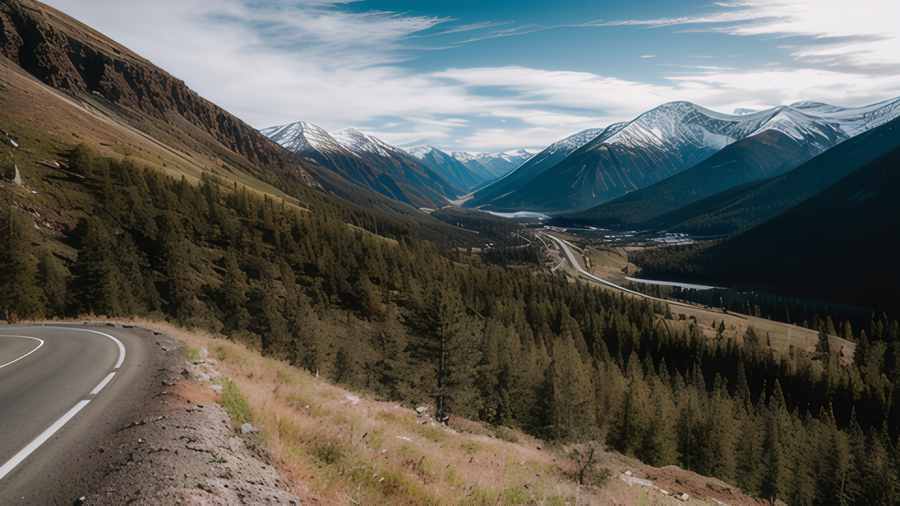
Duku Highway, North Section.From Dushanzi the road climbs into the Tianshan to the Hashilegen pass at 3,300 m, where snow walls several metres high can still line the road in June, the most dramatic stretch of the highway. It is narrow, steep and exposed, forty km/h limit, no trucks, rockfall after rain, and buses over eight seats are barred. Qiaoerma is the midpoint, with a war memorial and a checkpoint. A hundred-odd kilometres in about three hours. Use a low gear on long descents instead of riding the brakes, and stop for a few minutes if you smell hot pads. Cross winds hit the pass hard, so high-sided vans and campers should slow down and hold the wheel with both hands.
Road note:Two hours, mostly straight, with slow trucks on the climb out of Baicheng.
Eat:Noodles and grilled lamb in Baicheng, 35 CNY; a simple lunch at the caves car park, 30 CNY.
Sleep:Same hotel in Baicheng, 130 to 220 CNY.
Tip:If you plan the Subashi ruins, go in the morning: there is no shade at midday.
These are the first days of a foreign-vehicle run in Xinjiang, so fill the tank before leaving town; stations are further apart than they look.
3 Nalati, stay day
riding on the sky grassland.The sky grassland section at Nalati, meadow spread along the ridge, with horses offered by local herders. Agree the route and price before mounting. Unmarked tracks branch off to shepherd camps; do not turn into them without asking. Grassland and valley open out for miles, and herders move sheep across the road, so slow as soon as you see them. Days are hot and evenings cold, so a thick jacket in the boot covers both. Mosquitoes are active on the grassland, so carry long sleeves and repellent, and keep the car off soft meadow after rain. Herds cross the road without warning, so slow down early and never sound the horn at animals.
Grassland Sections.Two kinds of grassland: the humid Ili and Altay pastures with knee-high grass, spruce and wildflowers, and the high pastures of Bayanbulak and Balikun above 2,000 m, short but vast. Driving here means watching for livestock, which cross unmarked and appear in groups at blind bends, and never driving off the road onto grass, where wetland or animal burrows can swallow a wheel. Days are hot and evenings cold, so a thick jacket in the boot covers both. Mosquitoes are active on the grassland, so carry long sleeves and repellent, and keep the car off soft meadow after rain. Herds cross the road without warning, so slow down early and never sound the horn at animals.
Gongnaisi valley.The road back follows the river through forest, with hot springs and farmhouse restaurants along it. Damp valley air brings morning fog, so wait for it to lift before setting off. Valley roads bend often, with loose rock on the hill side and no barrier on the water side, so keep the speed down. The river runs muddy in summer and clears in autumn; never drive down onto the bed. The altitude here is close to the city, so the walking is easy and ordinary trainers are enough. Weather turns quickly and cloud brings a chill, so keep a jacket within reach in the car.
Road note:No driving today; park at the hotel and use local shuttles or walking, picking shade. With children or older travellers, put this stop in the morning when it is quieter and softer.
Eat:Food street: grilled lamb, pilaf, melon, 35 to 50 CNY.
Sleep:Turpan hotels 150 to 300 CNY.
Tip:Fill up before leaving Kashgar; the forest turn has no station nearby.
Today is about rest and supplies; fuel, water, cash and documents matter more than extra kilometres.
4 Nalati → Bayanbulak (90 km)
the southern Duku.The southern half of the Duku highway, climbing north from Kuqa through red gorges, passes and the snow line. Narrow and winding, open mid-June to mid-October and closed otherwise, so check the year notice before setting out. Brakes run hot after a long descent, so find flat ground and let them cool before stopping. The day covers 260 km, cut into two-hour blocks with lunch in a town en route. There are no shops nearby, so stock water and snacks at the previous stop. Time here can stretch or shrink with the light and your energy, so there is no need to chase the next stop.
Gongnaisi Forestry District.A mid-section stop on the Duku highway where Schrenk spruce crowds both sides of the Gongnaisi valley and the river turns white over rocks, with hot springs and farmhouse restaurants along the road. At around 1,800 m the valley runs ten degrees cooler than the plains in summer. Rooms are basic at 100 to 200 CNY and yurts can be rented. Signal drops in and out, so fill the tank before entering. The yellow-leaf window on birch and poplar lasts only two or three weeks, green early and bare late. Forest tracks are unpaved and muddy after rain, so two-wheel-drive cars should not push deep.
Wet Meadows.Wet meadow follows river bends and lake shores, shallow water alternating with reeds and grass, full of birds and mosquitoes. It looks small but is impassable by vehicle: grass on top, mud below, and a wheel sinks to the axle. On foot, step where root mat is dense; one step off and you are half a metre deep. Long sleeves and repellent are the minimum at dawn and dusk. Days are hot and evenings cold, so a thick jacket in the boot covers both. Mosquitoes are active on the grassland, so carry long sleeves and repellent, and keep the car off soft meadow after rain.
Road note:No long driving; a short run to the dunes and back.
Eat:River fish at the village, 60 CNY; cold noodles and barbecue in Yuli, 30 CNY.
Sleep:Korla hotels 150 to 350 CNY, easy parking at the edge of the centre.
Tip:Photography inside the caves is banned and bags go in a locker; carry nothing you cannot leave.
Watch the GPS and the fuel gauge together out here, and do not count on the next station.
5 Bayanbulak → Kuqa (260 km)
Duku Highway, South Section.From Bayanbulak the road crosses the Tielimaiti pass at 3,200 m and drops to Kuqa, swapping forest for red cliffs, hoodoos and desert, a different world from the north. The pass is the divide between north and south Xinjiang, and the climate turns dry the moment you cross. Twisting road, strict limits, several exposed unrailed stretches. Big and Small Dragon Pools sit just south of the pass. About 180 km, four hours. Cross winds hit the pass hard, so high-sided vans and campers should slow down and hold the wheel with both hands. Mountain weather turns fast and snow can close the road even in summer, so check the day's status before leaving.
Big and Small Dragon Pools.Two alpine lakes stacked in a valley south of the Tielimaiti pass, the larger one wide and deep green, ringed by spruce and snow peaks, with a roadside platform so no walking is needed. The smaller pool sits upstream and takes a short boardwalk. At 2,400 m there can be snow on the shore in June. No swimming or fishing. Use the lay-bys rather than stopping on the bends. The altitude here is close to the city, so the walking is easy and ordinary trainers are enough. Weather turns quickly and cloud brings a chill, so keep a jacket within reach in the car.
Road note:Two hours west, the same crosswind section at the gap.
Eat:Kuqa bazaar: baked buns, kebabs, dried apricots, 40 CNY.
Sleep:Shanshan hotels 130 to 250 CNY.
Tip:Do not leave the car in the sun with water bottles inside: they get hot enough to burn.
Halfway through: check tyre pressures and washer fluid, with plenty of road still ahead.
6 Kuqa → Korla (280 km)
Luntai Poplar Forest.Tens of thousands of hectares of wild poplar along the Tarim River on the northern edge of the Taklamakan, turning gold in October, standing in sand with reflections in the pools. Ticket and shuttle around 100 CNY, with a scenic drive and boardwalks. Mosquitoes are heavy and autumn wind strong. Seventy kilometres from Luntai town on good road, and crowded in mid-October, so go early. The yellow-leaf window on birch and poplar lasts only two or three weeks, green early and bare late. Forest tracks are unpaved and muddy after rain, so two-wheel-drive cars should not push deep. Light is dim under the trees and wet leaves are slippery, so walk slowly and leave lighters behind.
Tarim River.China's longest inland river, over two thousand kilometres from the Yarkant headwaters, running the whole northern rim of the Taklamakan between poplar, tamarisk and dunes. The riverside roads show water, herders' flocks and poplar stands, strong in autumn. Many are dirt and oilfield tracks where navigation is unreliable, so stay on the main line. The water is silty and undrinkable. The river runs muddy in summer and clears in autumn; never drive down onto the bed. Damp valley air brings morning fog, so wait for it to lift before setting off. Valley roads bend often, with loose rock on the hill side and no barrier on the water side, so keep the speed down.
Lunnan Oil Base.The frontline base of the Tarim oilfield, where the desert highway heads south across the Taklamakan between rows of wellheads and pipelines, lit up like a small city at night. It is not a scenic area, but it is where you fill the tank and buy water before the five-hundred-kilometre crossing. There are service points mid-way. Do not photograph installations where signs forbid it. The bazaar is busiest in the morning and empties after lunch, so shop early and start the bargaining low. Fuel, cash and supplies sit on the main street, so clear all three before leaving town. Old-town lanes are narrow, so park in the outer lot and walk in, and ask before taking portraits.
Road note:Two and a half hours north, climbing to the pass then down into the basin.
Eat:Bachu: roast lamb, pilaf and cold noodles, 40 to 60 CNY.
Sleep:Same hotel in Bachu, 130 to 250 CNY.
Tip:Do not arrive in the old city by car: park outside and walk the lanes.
By this stage car and driver are settled in, which is exactly when it pays to keep the speed down.
7 Korla → Turpan (370 km)
Gan gorge.A red-bed gorge on the southern flank of the Tianshan, walls banded red and grey, soft rock hollowed into rows of holes by wind. The highway runs through it and viewpoints show the whole line of the valley; light is hard at midday and strong towards evening. The rock changes colour with the light, and the same stretch looks different on the way back. The day covers 370 km, cut into two-hour blocks with lunch in a town en route. Cross winds hit the pass hard, so high-sided vans and campers should slow down and hold the wheel with both hands.
Ganhou and Toksun.The Ganhou gorge is the old corridor south from Turpan through bare black-grey rock, tens of kilometres of canyon with the road twisting along the floor. Toksun at the mouth is famous for its banmian noodles, where every passing driver stops for a bowl. Summer heat is extreme, so keep the cooling system healthy and watch for rockfall after rain. South of Toksun the road opens towards Karasahr and Korla. Cross winds hit the pass hard, so high-sided vans and campers should slow down and hold the wheel with both hands. Mountain weather turns fast and snow can close the road even in summer, so check the day's status before leaving.
Road note:No driving; everything within walking distance.
Eat:Yiwu: lamb soup and noodles, 30 to 40 CNY.
Sleep:Hami hotels 150 to 300 CNY.
Tip:Do not drive into the night; arrive an hour before dark.
By this stage car and driver are settled in, which is exactly when it pays to keep the speed down.
8 Turpan → Urumqi (190 km)
The Dabancheng Wind Gap.The gap between the Tianshan and Bogda ranges where wind blows nearly every day of the year — the windbreak walls and ranks of turbines along the road say so without words. At 190 km it is a short hop: leave mid-morning and you are in Turpan for lunch, with the whole afternoon for the trio on the city's doorstep. Do the Karez wells first to learn where the water comes from, hide in Grape Valley over the hot hours, and save the Flaming Mountains for after four, when the ground has cooled enough to stand on. Crosswind through the gap is honest and steady; keep room around trucks and take it gently.
Yanhu Salt Flats.A dry salt basin between Urumqi and Turpan where the ground is crusted white and looks snow-covered from a distance. A small scenic area allows walking on the crust for a few dozen yuan, and people photograph reflections. The basin is extremely hot in summer with ground temperatures near 60 C. The crust edge is soft, so do not wander far. Wind takes hats. The water shifts colour with the weather, grey under cloud and blue-green in sun, so an early start or a late stop gives the better light. The lake sits higher than the city and the air is thinner, so take the first hour slowly and skip the steep climb right after parking.
Road note:An hour south, straight and easy.
Eat:Grilled lamb and lagman, 35 to 50 CNY.
Sleep:Yining hotels 150 to 300 CNY.
Tip:Reed channels are shallow and easy to ground a boat; use the marked routes.
The last days: keep permits, the temporary plate and receipts in one folder for the border.
Tickets and opening hours
| Spot | Ticket | Opening |
|---|---|---|
| Dushanzi Grand Canyon | About CNY 40 | As posted at the site |
| Duku Highway, North Section | Tickets at the gate | As posted at the site |
| riding on the sky grassland | Tickets at the gate | As posted at the site |
| Grassland Sections | As posted at the site | As posted at the site |
| Gongnaisi valley | As posted at the site | As posted at the site |
| the southern Duku | As posted at the site | As posted at the site |
| Gongnaisi Forestry District | Free | As posted at the site |
| Wet Meadows | As posted at the site | As posted at the site |
| Duku Highway, South Section | As posted at the site | As posted at the site |
| Big and Small Dragon Pools | Free | As posted at the site |
| Luntai Poplar Forest | About CNY 100, shuttle included | As posted at the site |
| Tarim River | As posted at the site | As posted at the site |
| Lunnan Oil Base | As posted at the site | As posted at the site |
| Gan gorge | Tickets at the gate | As posted at the site |
Prices are indicative and change in peak season and at holidays; always check the posted rate. Shuttles, guides, horse hire and boats are charged separately.
Six things to know on the road
- Foreign vehicles must be declared to customs by a licensed travel agency. Private cars cannot clear the border on their own; that is the procedure, not an option.
- The temporary plate is valid three months. Do not change the route filed at entry without re-filing it.
- Some frontier districts in Xinjiang need prior approval, and Xinjiang to Tibet cannot be crossed directly: you must go around via Golmud on the G109.
- Fuel is sold against ID, so keep the vehicle registration and licence within reach; stations can be 200 km apart.
- Speed limits differ sharply between expressway and national road, and average-speed cameras are everywhere, so slow down at every sign.
- At checkpoints, slow early and hand over passport, licence, registration and temporary plate together in one folder.
When to come
The Duku opens in June and closes in October, with July to September the usable window, and Nalati flowers in May and June.
How to extend it
To add time, stay an extra night in one town and keep the next day free for lanes or valleys you missed. For two or three more days it is better to cut a stage and slow the rest than to cram in more driving; any real change of direction needs the filed route updated.
Contact and quote
This route can be adjusted to your dates, group size and vehicle. The quote covers customs declaration, temporary plate, route filing and port handling, and excludes fuel, tickets, rooms and meals. Send the port and date you plan to enter and we will confirm what is workable under the current rules.
WhatsApp: +86 13759155671 Email: [email protected]