Who this route suits
9 days and 1820 kilometres, Karamay Oil Field, Black Oil Mountain, the Urho ghost city yardangs, Irtysh valley, Jiadengyu, the valley gate. Most days are three to five hours behind the wheel with the rest left for the sights, a moderate pace that suits drivers with some experience who want northern Xinjiang covered properly without doubling back, and travellers whose time is fixed at a bit over a week.
How the foreign vehicle comes in
The Xinjiang gateway is Horgos on the Kazakh border. Foreign vehicles must be declared to customs by a licensed agency; private cars cannot clear on their own. The service fee is 6,000 to 9,000 CNY per vehicle, covering customs declaration, border formalities, the Chinese temporary driving permit, the temporary plate (valid three months), route filing and on-site handling at the port. The customs deposit is guaranteed by us, after which the owner pays 10,000 CNY, refunded in full three to five working days after leaving China. Documents are due 20 days ahead: passport, Chinese visa, driving licence, passport photo of the driver on a white background, vehicle registration, title, engine number, and front, rear and side photos of the car; vehicles over six years old also need a roadworthiness certificate.
Route overview
9 days and 1820 kilometres, averaging 202 km a day; 8 driving days and 1 days standing still. The route starts and ends as follows: Urumqi departure, returning on the same loop.
| Day | Leg | Distance | Main stops |
|---|---|---|---|
| 1 | Urumqi to Karamay | 320 km | Karamay Oil Field, Black Oil Mountain |
| 2 | Karamay to Burqin | 330 km | the Urho ghost city yardangs, Irtysh valley |
| 3 | Burqin to Kanas | 150 km | Jiadengyu, the valley gate, The Three Bays, The Three Bays, Kanas Lake |
| 4 | Kanas stay | 0 km | the three bays boardwalk in full, Fish Pavilion, Hemu Village |
| 5 | Kanas to Hemu | 70 km | Hemu River, Birch Groves, Hemu Village |
| 6 | Hemu to Burqin | 160 km | the Hemu viewpoint at dawn, Grassland Sections |
| 7 | Burqin to Urho | 230 km | Irtysh valley, Urho Ghost City |
| 8 | Urho to Urumqi | 420 km | the Karamay oil field |
| 9 | Urumqi to Urumqi | 140 km | Tianchi, Dingshen Zhen, East Tianshan pond |
Day by day
1 Urumqi to Karamay (320 km)
Karamay Oil Field. China's first big oilfield, and the road north to Urho runs between pumpjacks packed to the horizon, which is what people mean by the Hundred-Mile Oilfield. By day it is pure industry; after sunset the jacks nod in rows against a desert sky and it becomes one of the more unexpected sights in Xinjiang. Pull-offs exist along the highway. Do not leave the road inside the field; well pads and pipelines are off limits. Pull-offs are few, so take the marked ones and avoid stopping on the shoulder. Weather turns quickly and cloud brings a chill, so keep a jacket within reach in the car. Note the zone and number where you park, as big sites have several lots and it is easy to lose the car.
Black Oil Mountain. A cluster of natural asphalt mounds on the north edge of Karamay city, where crude seeps up and gathers into slow black bubbles, the largest mound several metres high. This seep gave the city its name. It is a small ticketed site with a boardwalk loop of about half an hour. The tar sticks to shoes, so do not wear anything you care about. Ten minutes from the centre, easy to combine with an evening drive. Pull-offs are few, so take the marked ones and avoid stopping on the shoulder. There are no shops nearby, so stock water and snacks at the previous stop. Time here can stretch or shrink with the light and your energy, so there is no need to chase the next stop.
Road note: Five to six hours today, so plan one proper rest and a refuel, and watch for fatigue in the afternoon light.Morning fog sits in the valleys and fuel stops are far apart, so fill up before climbing.
Eat: Noodles, pilaf, baked buns and milk tea are the everyday menu, around 45 CNY per person.
Sleep: County hotels run 150 to 300 CNY, while lodges inside Kanas and Hemu ask 400 to 800 and need booking ahead.
Tip: Northern nights are cold even in July, so pack a jacket, and fill the tank before the mountains where stations are far apart.
This is the opening stretch of a foreign-plate trip in Xinjiang, so fill the tank before leaving town; stations outside the city are further apart than they look.
2 Karamay to Burqin (330 km)
the Urho ghost city yardangs. The yardang field north of Karamay, where wind cuts lake deposits into earth forts and beast-shaped remnants. Shuttles run inside, shadows stretch at sunset, and wind turns among the towers. The rock changes colour with the light, and the same stretch looks different on the way back. There is no shade in the gorge, so go in the morning or late rather than at midday. The day covers 100 km, short enough to stop whenever something looks worth it. The viewing platforms are spread out, so allow two hours for the full walk or keep to the main platform if time is short. There is no shade down in the canyon, so hats and water matter, and the loose gravel trails suit firm shoes.
Irtysh valley. The only Chinese river draining to the Arctic, coming off the Altay and running west through poplar, willow and marsh. The Burqin to Habahe stretch is the prettiest, water and leaves changing colour together in autumn. Most boardwalks and viewpoints sit on the sheltered side; the light is strong half an hour before sunset. The day covers 230 km, short enough to stop whenever something looks worth it. The river runs muddy in summer and clears in autumn; never drive down onto the bed. Damp valley air brings morning fog, so wait for it to lift before setting off. Valley roads bend often, with loose rock on the hill side and no barrier on the water side, so keep the speed down.
Road note: Five to six hours today, so plan one proper rest and a refuel, and watch for fatigue in the afternoon light.Morning fog sits in the valleys and fuel stops are far apart, so fill up before climbing.
Eat: Around Burqin and Hemu the river fish is the local draw, sold by weight, so confirm the price first, about 60 CNY per person.
Sleep: Burqin has plenty of clean rooms near 200 CNY, roughly double inside the scenic area.
Tip: Cars cannot roam inside Kanas and Hemu, so park at Jiadengyu and take the shuttle with light luggage.
This is the opening stretch of a foreign-plate trip in Xinjiang, so fill the tank before leaving town; stations outside the city are further apart than they look.
3 Burqin to Kanas (150 km)
Jiadengyu, the valley gate. The gateway to Kanas, with the visitor centre and shuttle interchange, private cars parked outside. One valley leads to the lake, another to Hemu, and the two split here. This is the last place to top up fuel, water and cash; choices thin out badly beyond here. The day covers 150 km, short enough to stop whenever something looks worth it. Pull-offs are few, so take the marked ones and avoid stopping on the shoulder. There are no shops nearby, so stock water and snacks at the previous stop. Time here can stretch or shrink with the light and your energy, so there is no need to chase the next stop.
The Three Bays. Wolong Bay, Moon Bay and Shenxian Bay are three bends of the Kanas River, each with a shuttle stop. Wolong has a wide pool with a sandbar in the middle and a short path down to the water. Moon Bay is the photogenic one, a crescent peninsula wrapped by blue-green water, seen straight from the roadside platform with no walking. Shenxian Bay holds fog until about eight in the morning. Walking the whole boardwalk takes two hours downhill. Pull-offs are few, so take the marked ones and avoid stopping on the shoulder. There are no shops nearby, so stock water and snacks at the previous stop. Time here can stretch or shrink with the light and your energy, so there is no need to chase the next stop.
Kanas Lake. A glacial lake deep in the Altai Mountains, its water shifting colour with the season and the light, ringed by Tuvan villages that have stood by the shore for centuries. Jiadengyu is the gate: in season private cars park at the transfer centre and the valley is entered by shuttle. The three bays — Wolong, Moon and Fairy — line up on one route, fine from the road, though the boardwalks reward an hour on foot. The 150 km drive takes barely three hours, so keep your legs for the lakeside. The Guanyu Pavilion means a thousand-plus steps and is worth it only if you have time to spare. In September the birch gold draws crowds; buy tickets and shuttle seats online the day before.
Road note: Three to four hours today, straight road early and mountain or city traffic late, so the pace falls naturally.Morning fog sits in the valleys and fuel stops are far apart, so fill up before climbing.
Eat: Big-plate chicken feeds two or three and lands near 50 CNY per person.
Sleep: Chain hotels in Karamay and Fuyun cost 180 to 260 CNY with easy parking.
Tip: Frost arrives on mountain nights after September, so clear the windscreen before leaving.
By this point in a foreign-plate Xinjiang drive, keep one eye on the map and one on the gauge and never bet on the next station.
4 Kanas stay (no driving)
the three bays boardwalk in full. Three bends along the Kanas lake shore, linked by boardwalk in about two hours end to end. Morning mist and afternoon light are both worth waiting for; time it against the tour groups. Most boardwalks and viewpoints sit on the sheltered side; the light is strong half an hour before sunset. There are no shops nearby, so stock water and snacks at the previous stop. Time here can stretch or shrink with the light and your energy, so there is no need to chase the next stop. Pull-offs are few, so take the marked ones and avoid stopping on the shoulder. Food nearby is noodles and grilled meat at about a third more than town prices, so carry your own water and snacks.
Fish Pavilion. The viewpoint above the lake for the classic panorama; a shuttle plus a stair, strong in late afternoon light. There are no shops nearby, so stock water and snacks at the previous stop. Food nearby is noodles and grilled meat at about a third more than town prices, so carry your own water and snacks. Carry rubbish out with you, as bins are few and plastic blows away where the wind is strong. When it is busy, walk the inner loop first and come back to the main gate against the flow to save time. The altitude here is close to the city, so the walking is easy and ordinary trainers are enough.
Hemu Village. The last road-accessible village inside the Kanas reserve, where Tuvan families still live in log cabins with pitched roofs along the Hemu River. Cars stop at the gate and shuttle buses take you in. Walk twenty minutes up the wooden steps behind the village before dawn and the whole valley sits below you, smoke rising from the roofs and mist drifting over the water. Beds run from around 100 CNY to 700 CNY a night in season. Old-town lanes are narrow, so park in the outer lot and walk in, and ask before taking portraits. The bazaar is busiest in the morning and empties after lunch, so shop early and start the bargaining low.
Road note: No driving today, so leave the car at the guesthouse and use shuttles or walk, parking in the shade.Morning fog sits in the valleys and fuel stops are far apart, so fill up before climbing.
Eat: Noodles, pilaf, baked buns and milk tea are the everyday menu, around 45 CNY per person.
Sleep: County hotels run 150 to 300 CNY, while lodges inside Kanas and Hemu ask 400 to 800 and need booking ahead.
Tip: Northern nights are cold even in July, so pack a jacket, and fill the tank before the mountains where stations are far apart.
By this point in a foreign-plate Xinjiang drive, keep one eye on the map and one on the gauge and never bet on the next station.
5 Kanas to Hemu (70 km)
Hemu River. Glacial meltwater runs straight through the village, cold even in August, over a bed of rounded stones. The riverside boardwalk reaches Hemu Bridge in about twenty minutes, and the bridge is the classic angle: birch on one bank, spruce on the other, both turning gold in late September and October. A few stalls sell grilled fish and milk tea. The track deeper towards Meili Peak is rough and not for sedans. The river runs muddy in summer and clears in autumn; never drive down onto the bed. Damp valley air brings morning fog, so wait for it to lift before setting off. Valley roads bend often, with loose rock on the hill side and no barrier on the water side, so keep the speed down.
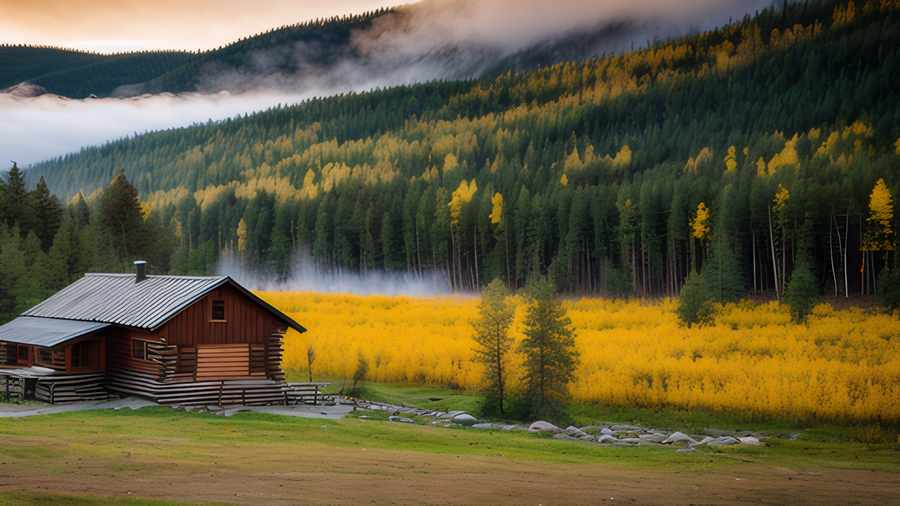
Birch Groves. Birch is the main event of a northern Xinjiang autumn: white trunks you can peel in layers, leaves turning from late September, peak in early October, one gust and the ground is gold. Groves line the road from Burqin to Jiadengyu, the Hemu village entrance and the Kanas outlet, so no special stop is needed. Light inside the grove is soft, which suits overcast days. Mosquitoes are dense in summer, so cover up and bring repellent. Light is dim under the trees and wet leaves are slippery, so walk slowly and leave lighters behind. The yellow-leaf window on birch and poplar lasts only two or three weeks, green early and bare late.
Hemu Village. The last road-accessible village inside the Kanas reserve, where Tuvan families still live in log cabins with pitched roofs along the Hemu River. Cars stop at the gate and shuttle buses take you in. Walk twenty minutes up the wooden steps behind the village before dawn and the whole valley sits below you, smoke rising from the roofs and mist drifting over the water. Beds run from around 100 CNY to 700 CNY a night in season. Old-town lanes are narrow, so park in the outer lot and walk in, and ask before taking portraits. The bazaar is busiest in the morning and empties after lunch, so shop early and start the bargaining low.
Road note: A short run of an hour or two, with a stop or two on the way and no need to hurry.Morning fog sits in the valleys and fuel stops are far apart, so fill up before climbing.
Eat: Around Burqin and Hemu the river fish is the local draw, sold by weight, so confirm the price first, about 60 CNY per person.
Sleep: Burqin has plenty of clean rooms near 200 CNY, roughly double inside the scenic area.
Tip: Cars cannot roam inside Kanas and Hemu, so park at Jiadengyu and take the shuttle with light luggage.
By this point in a foreign-plate Xinjiang drive, keep one eye on the map and one on the gauge and never bet on the next station.
6 Hemu to Burqin (160 km)
the Hemu viewpoint at dawn. The terrace behind Hemu village, climbed at dawn to look down on the whole settlement, log roofs, hearth smoke and mist spreading through the valley. Be there half an hour before sunrise; the platform fills once the sun is up. Grassland and valley open out for miles, and herders move sheep across the road, so slow as soon as you see them. The day covers 160 km, short enough to stop whenever something looks worth it. There are no shops nearby, so stock water and snacks at the previous stop. Pull-offs are few, so take the marked ones and avoid stopping on the shoulder. With children or older travellers, put this stop in the morning, when crowds are thin and the light is soft.
Grassland Sections. Two kinds of grassland: the humid Ili and Altay pastures with knee-high grass, spruce and wildflowers, and the high pastures of Bayanbulak and Balikun above 2,000 m, short but vast. Driving here means watching for livestock, which cross unmarked and appear in groups at blind bends, and never driving off the road onto grass, where wetland or animal burrows can swallow a wheel. Days are hot and evenings cold, so a thick jacket in the boot covers both. Mosquitoes are active on the grassland, so carry long sleeves and repellent, and keep the car off soft meadow after rain. Herds cross the road without warning, so slow down early and never sound the horn at animals.
Road note: Three to four hours today, straight road early and mountain or city traffic late, so the pace falls naturally.Morning fog sits in the valleys and fuel stops are far apart, so fill up before climbing.
Eat: Big-plate chicken feeds two or three and lands near 50 CNY per person.
Sleep: Chain hotels in Karamay and Fuyun cost 180 to 260 CNY with easy parking.
Tip: Frost arrives on mountain nights after September, so clear the windscreen before leaving.
Halfway through, the driver and the car are settled, which is exactly when speed creeps up; hold the limits.
7 Burqin to Urho (230 km)
Irtysh valley. The only Chinese river draining to the Arctic, coming off the Altay and running west through poplar, willow and marsh. The Burqin to Habahe stretch is the prettiest, water and leaves changing colour together in autumn. Most boardwalks and viewpoints sit on the sheltered side; the light is strong half an hour before sunset. The day covers 230 km, short enough to stop whenever something looks worth it. The river runs muddy in summer and clears in autumn; never drive down onto the bed. Damp valley air brings morning fog, so wait for it to lift before setting off. Valley roads bend often, with loose rock on the hill side and no barrier on the water side, so keep the speed down.
Urho Ghost City. A yardang field about 100 km north of Karamay, eroded into castles, mushrooms and beasts across tens of kilometres, where wind through the gullies makes the whistling that gave the place its name. A tourist train loops four or five stops in ninety minutes, and boardwalks link the viewpoints. The last hour before sunset turns the rock red and stretches the shadows. Summer midday hits 50 C with sand-laden wind, so protect cameras. The viewing platforms are spread out, so allow two hours for the full walk or keep to the main platform if time is short. There is no shade down in the canyon, so hats and water matter, and the loose gravel trails suit firm shoes.
Road note: Three to four hours today, straight road early and mountain or city traffic late, so the pace falls naturally.Morning fog sits in the valleys and fuel stops are far apart, so fill up before climbing.
Eat: Noodles, pilaf, baked buns and milk tea are the everyday menu, around 45 CNY per person.
Sleep: County hotels run 150 to 300 CNY, while lodges inside Kanas and Hemu ask 400 to 800 and need booking ahead.
Tip: Northern nights are cold even in July, so pack a jacket, and fill the tank before the mountains where stations are far apart.
Halfway through, the driver and the car are settled, which is exactly when speed creeps up; hold the limits.
8 Urho to Urumqi (420 km)
the Karamay oil field. An oil city on the western edge of the Junggar basin, pumpjacks standing across the desert in rows like nodding iron horses. The centre is clean with plenty of rooms, Urho ghost city to the north and the Gurbantunggut sand to the east. This is the last place to top up fuel, water and cash; choices thin out badly beyond here. The town is small and one main street holds the fuel station, the workshop and the market. The day covers 420 km, cut into two-hour blocks with lunch in a town en route. Old-town lanes are narrow, so park in the outer lot and walk in, and ask before taking portraits.
Road note: Five to six hours today, so plan one proper rest and a refuel, and watch for fatigue in the afternoon light.Morning fog sits in the valleys and fuel stops are far apart, so fill up before climbing.
Eat: Around Burqin and Hemu the river fish is the local draw, sold by weight, so confirm the price first, about 60 CNY per person.
Sleep: Burqin has plenty of clean rooms near 200 CNY, roughly double inside the scenic area.
Tip: Cars cannot roam inside Kanas and Hemu, so park at Jiadengyu and take the shuttle with light luggage.
On the closing days, check tyre pressures and washer fluid before the last long run home.
9 Urumqi to Urumqi via Tianchi Lake (140 km)
Tianchi. Tianchi sits below Bogda Peak south of Fukang at about 1,900 metres, a long narrow lake against snow and spruce. Shuttles climb to it, and the lakeside boardwalk takes about two hours around. Most boardwalks and viewpoints sit on the sheltered side; the light is strong half an hour before sunset. The day covers 140 km, short enough to stop whenever something looks worth it. The water shifts colour with the weather, grey under cloud and blue-green in sun, so an early start or a late stop gives the better light. The lake sits higher than the city and the air is thinner, so take the first hour slowly and skip the steep climb right after parking.
Dingshen Zhen. A single ancient elm on the north shore of Heavenly Lake, said to be over a thousand years old, standing alone at the water's edge with red cloth strips tied to its branches by worshippers. It is a few minutes from the start of the loop boardwalk, so no detour is needed, and there is an information board with the legend. Do not climb the tree or pull the strips. Wind off the lake takes hats and paper quickly. Read the signs on photography and put the phone away where shooting is banned, as staff will say so directly. With children or older travellers, put this stop in the morning, when crowds are thin and the light is soft.
East Tianshan pond. A smaller lake below the main one, reached on a stepped path through spruce, with a waterfall between the two. Quieter than the main shore. Wind on the shore is strong, so keep a jacket in the car; the loop road is slow and the marked pull-offs are the only safe stops. The water shifts colour with the weather, grey under cloud and blue-green in sun, so an early start or a late stop gives the better light. The lake sits higher than the city and the air is thinner, so take the first hour slowly and skip the steep climb right after parking. Read the signs on photography and put the phone away where shooting is banned, as staff will say so directly.
Road note: Three to four hours today, straight road early and mountain or city traffic late, so the pace falls naturally.Morning fog sits in the valleys and fuel stops are far apart, so fill up before climbing.
Eat: Big-plate chicken feeds two or three and lands near 50 CNY per person.
Sleep: Chain hotels in Karamay and Fuyun cost 180 to 260 CNY with easy parking.
Tip: Frost arrives on mountain nights after September, so clear the windscreen before leaving.
On the closing days, check tyre pressures and washer fluid before the last long run home.
Tickets and opening hours
| Spot | Ticket reference | Opening hours |
|---|---|---|
| Karamay Oil Field | free | as posted at the site |
| Black Oil Mountain | about 40 CNY | as posted at the site |
| the Urho ghost city yardangs | about 46 CNY | as posted at the site |
| Irtysh valley | free | as posted at the site |
| Jiadengyu, the valley gate | free | as posted at the site |
| The Three Bays | charged at the gate | as posted at the site |
| Kanas Lake | about 160 CNY | as posted at the site |
| the three bays boardwalk in full | charged at the gate | as posted at the site |
| Fish Pavilion | about 20 CNY | as posted at the site |
| Hemu Village | about 60 CNY | as posted at the site |
| Hemu River | charged at the gate | as posted at the site |
| Birch Groves | charged at the gate | as posted at the site |
| the Hemu viewpoint at dawn | charged at the gate | as posted at the site |
| Grassland Sections | charged at the gate | as posted at the site |
Prices above are a reference and move with season and holidays, so check the posted rate on the day; shuttles, guides, horses and boats are charged separately.
Six things to know on the road
- Foreign vehicles must be declared to customs by a licensed travel agency. Private cars cannot clear the border on their own; that is the procedure, not an option.
- The temporary plate is valid three months. Do not change the route filed at entry without re-filing it.
- Some frontier districts in Xinjiang need prior approval, and Xinjiang to Tibet cannot be crossed directly: you must go around via Golmud on the G109.
- Fuel is sold against ID, so keep the vehicle registration and licence within reach; stations can be 200 km apart.
- Speed limits differ sharply between expressway and national road, and average-speed cameras are everywhere, so slow down at every sign.
- At checkpoints, slow early and hand over passport, licence, registration and temporary plate together in one folder.
When to come
The northern window runs from June to September: grassland greens up in June with snow still low, wildflowers and settled weather arrive in July and August, and the birches turn in September with good light. Snow starts on the mountains after October, when the Duku highway and some passes close, so confirm access before leaving.
How to extend it
The simplest extension is another night in Urumqi, with no driving the next day and the lanes or valleys you missed filled in on foot. If you can add two or three days, cut a section rather than stretch the calendar, and slow the remaining legs down. Any real change of direction towards Ili or eastern Xinjiang has to be refiled on the route permit.
Contact and quote
This route can be adjusted to your dates, group size and vehicle. The quote covers customs declaration, temporary plate, route filing and port handling, and excludes fuel, tickets, rooms and meals. Send the port and date you plan to enter and we will confirm what is workable under the current rules.
WhatsApp: +86 13759155671 Email: [email protected]