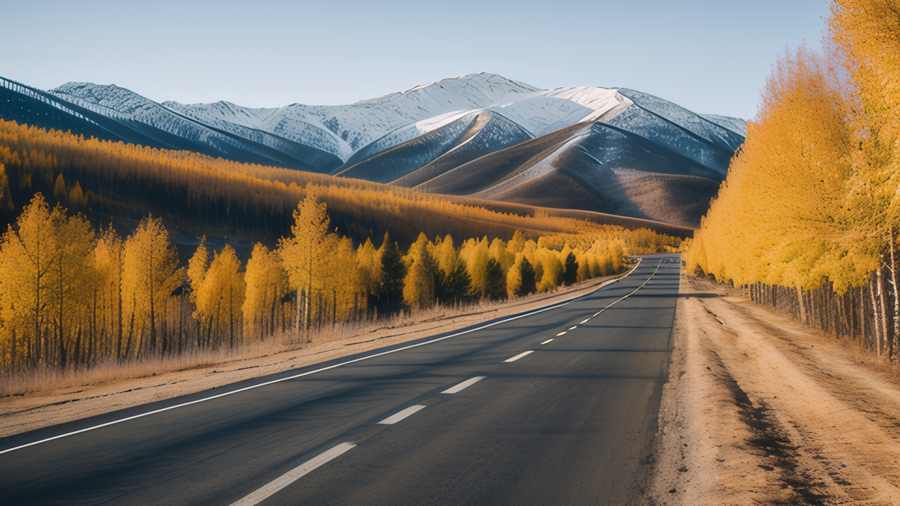
Who this route suits
For doing north and east Xinjiang in one sweep: the fresh first days go to Kanas and Hemu while legs and patience are still good, then the east takes over with gobi, ruins and serious wind. Thirteen days, 3,320 km, in and out of Urumqi.
How the foreign vehicle comes in
The Xinjiang gateway is Horgos on the Kazakh border. Foreign vehicles must be declared to customs by a licensed agency; private cars cannot clear on their own. The service fee is 6,000 to 9,000 CNY per vehicle, covering customs declaration, border formalities, the Chinese temporary driving permit, the temporary plate (valid three months), route filing and on-site handling at the port. The customs deposit is guaranteed by us, after which the owner pays 10,000 CNY, refunded in full three to five working days after leaving China. Documents are due 20 days ahead: passport, Chinese visa, driving licence, passport photo of the driver on a white background, vehicle registration, title, engine number, and front, rear and side photos of the car; vehicles over six years old also need a roadworthiness certificate.
Route overview
| Day | Leg | Distance | Main stops |
|---|---|---|---|
| 1 | Urumqi – Fuyun | 480 km | the eastern Gobi, the edge of the Kalamaili reserve |
| 2 | Fuyun – Burqin | 330 km | the Altay grassland, Fuhai |
| 3 | Burqin – Kanas | 150 km | the Jiadengyu gate, Wolong Bay, Moon Bay, Kanas Lake |
| 4 | Kanas – Hemu | 70 km | the Hemu valley, birch woods, Tuvan log houses |
| 5 | Hemu – Burqin | 160 km | the Hemu viewpoint at dawn, grassland |
| 6 | Burqin – Urho | 230 km | the Irtysh valley, the Colourful Beach, towards Urho |
| 7 | Urho – Urumqi | 420 km | the Karamay oil belt, a long drive, an early start |
| 8 | Urumqi – Turpan | 190 km | the Dabancheng Wind Gap, Flaming Mountains, Grape Valley, Karez wells |
| 9 | Turpan – Hami | 420 km | Shanshan, Kumtag, a long desert run, an early start |
| 10 | Hami – Barkol | 130 km | the Tianshan temple, Barkol Lake, Barkol old town |
| 11 | Barkol – Hami | 130 km | the northern Tianshan slope, Barkol grassland |
| 12 | Hami – Turpan | 420 km | Shanshan, the hundred-mile wind zone, a long drive, an early start |
| 13 | Turpan – Urumqi | 190 km | the Dabancheng Wind Gap, the salt lakes |
Day by day
1 Urumqi – Fuyun (480 km)
Kalamaili. A game reserve on the eastern rim of the Junggar Basin, where the road skirts the edge and goitered gazelle and khulan wild ass appear beside the tarmac as a matter of routine. Nothing breaks the plain for hours: the surface is straight, traffic is thin and the wind arrives without warning, so keep both hands on the wheel and mind the trucks. Set out from Urumqi early, because 480 km is a long pull; stop at Qiakuertu town midday for fuel and noodles, and roll into Fuyun with daylight to spare. Phone signal drops in and out here, so save the route and tonight's stop offline before you leave, and fill the tank rather than trusting the next station.
On the way. The day also runs along the eastern rim of the Gurbantunggut Desert, a long drive, an early start. Save the route offline before setting out.
Road note: A full day of driving on highway and straight road; fill up before the last town.
Eat: Noodles and grilled meat at Qiakuertu town, 30 to 45 yuan a head
Sleep: Hotels on the main street of Fuyun, 150 to 300 yuan, easy parking; book ahead in season.
Tip: Signal comes and goes on the gobi, so keep offline maps and a full tank.
2 Fuyun – Burqin (330 km)
The Altay grassland. A grass belt watered by the Irtysh and Ulungur rivers, grazing country Kazakh herders have crossed with their flocks for generations. In summer it runs green to the horizon, yurts and sheep all the way, and at the seasonal moves the road fills with livestock — slow down as soon as you see them and never squeeze past on a bend. The 330 km are unhurried; a short detour at Fuhai brings you to Ulungur Lake, where the wind is strong and grilled fish is the honest lunch. Altitude stays modest but the weather turns quickly up here, so keep rain gear where you can reach it, and save the Burqin embankment night market for the evening.
On the way. The day also passes Fuhai and Ulungur Lake. Stop by the water if the wind allows, and eat the fish.
Road note: Half a day or more on sealed road; livestock on the road at moving time, give way early.
Eat: Grilled fish at Fuhai, herder-family meat dishes, 50 to 80 yuan a head
Sleep: Hotels on the main street of Burqin, 150 to 300 yuan, easy parking; book ahead in season.
Tip: Keep an hour for the embankment night market; grilled fish with honey yoghurt is the local pairing.
3 Burqin – Kanas (150 km)
Kanas Lake. A glacial lake deep in the Altai Mountains, its water shifting colour with the season and the light, ringed by Tuvan villages that have stood by the shore for centuries. Jiadengyu is the gate: in season private cars park at the transfer centre and the valley is entered by shuttle. The three bays — Wolong, Moon and Fairy — line up on one route, fine from the road, though the boardwalks reward an hour on foot. The 150 km drive takes barely three hours, so keep your legs for the lakeside. The Guanyu Pavilion means a thousand-plus steps and is worth it only if you have time to spare. In September the birch gold draws crowds; buy tickets and shuttle seats online the day before.
On the way. The day also takes in the Jiadengyu gate, Wolong Bay and Moon Bay. View the bays from the car; step onto the boardwalks only where you want the photo.
Road note: Winding but well-surfaced mountain road; beyond the gate you ride the park shuttle, not your own car.
Eat: Noodles and naan at park restaurants, 40 to 60 yuan a head
Sleep: Lodging inside Kanas or at Jiadengyu, 150 to 400 yuan, wide seasonal swings; book ahead.
Tip: Buy park tickets and shuttle seats online a day ahead to skip the high-season queue.
4 Kanas – Hemu (70 km)
Hemu village. A Tuvan village on the east bank of the Kanas River, log houses lined along the valley floor inside birch and larch forest. The 70 km of mountain road is narrow but quiet; give way calmly and do not rush it. In season cars stop at the outer car park and shuttles run into the village, where rooms cluster along the main street — the nearer the river, the dearer and the livelier. Climb the ridge viewpoint at dusk for smoke over the roofs; it beats the midday view. Temperatures fall hard after dark, so pack a jacket even in July or August. Cash matters here: not every shop takes a card, and signal follows the weather, so download tomorrow's maps the night before.
On the way. The day also passes birch woods and the Tuvan log houses. In season you park outside and ride the village shuttle in.
Road note: A 70 km mountain road, narrow but quiet, slow early for oncoming traffic.
Eat: Boiled meat and milk tea at village kitchens, 40 to 60 yuan a head
Sleep: Inns along the main street of Hemu, 150 to 400 yuan, dearer near the river; book ahead.
Tip: Draw cash in Burqin; cards are not a given inside the village.
5 Hemu – Burqin (160 km)
The Hemu viewpoint. The hillside opposite the village, and the main reason to sleep in Hemu: at dawn, mist climbs out of the river valley and stacks over the wood-shingle roofs until the first sun lights the whole bowl of the valley. It means getting up at six and walking up in the dark — the steps are slippery, so bring a torch. Afterwards, a hot breakfast in the village, then the 160 km back down the valley to Burqin along the road you came in on; it is precisely the stretch where attention drifts, so keep your guard up and hold your speed. The grassland sections carry livestock again, and the afternoon leaves room for the Colourful Beach or the night market you missed.
On the way. The day also runs through grassland, with the Colourful Beach or the night market as an optional fill-in. It is yesterday's road in reverse, so do not switch off.
Road note: Sealed road retraced; the familiar road is where attention drifts, hold your speed.
Eat: Grilled fish and noodles in Burqin, 30 to 50 yuan a head
Sleep: Hotels on the main street of Burqin, 150 to 300 yuan, easy parking; book ahead in season.
Tip: For the morning mist, get up at six and carry a torch; the steps are slippery.
6 Burqin – Urho (230 km)
The Colourful Beach. Yardang landforms on the north bank of the Irtysh a few kilometres out of Burqin: rushing river, striped clay hills and poplar groves compressed into one short reach, and the colours deepen toward sunset. It sits almost on today's route, so an hour's stop inside the 230 km costs nothing. Only the north bank is open — south of the river is a protected forest belt — and the boardwalk ends at the classic viewpoint. The mid-afternoon light is harsh; after four it starts to sing. Then the road runs south across open desert, crosswind building with the emptiness, and Urho arrives by evening, close enough for the Ghost City's morning light tomorrow.
On the way. The day also follows the Irtysh valley and turns towards Urho across the gobi. Leave the Colourful Beach for after four, when the light softens.
Road note: Sealed main road then straight gobi; crosswind is real, keep both hands on the wheel.
Eat: A bite before departure or noodles in Urho, 30 to 45 yuan a head
Sleep: Hotels on the main street of Urho, 150 to 300 yuan, easy parking; book ahead in season.
Tip: Save the Ghost City for tomorrow's morning light; do not force the evening show.
7 Urho – Urumqi (420 km)
The Karamay oil belt. South of Urho the pumpjacks march across the desert to the horizon, pipelines and storage tanks in continuous blocks — one of the few places in China where the highway runs straight through an oilfield. Drones are banned here, so read the signs before flying anything. The 420 km make a full day: leave in the cool of the morning, eat and refuel in Karamay city at midday, and top up at every station because services thin out between towns. The wind-prone sections after lunch push trucks sideways; keep distance and finish overtakes in one clean move. Urumqi comes up by early evening, in time for a rest before the eastern leg begins.
On the way. The day also passes Karamay city, a long drive, an early start. Lunch and fuel inside Karamay split the day neatly.
Road note: A full day on highway and straight road; service areas are far apart, fill up at every one.
Eat: Home-style dishes and noodles in Karamay, 35 to 50 yuan a head
Sleep: Hotels on the main street of Urumqi, 150 to 300 yuan, easy parking; book ahead in season.
Tip: Drones are banned across the oilfield; pack the aircraft away at the warning signs.
8 Urumqi – Turpan (190 km)
The Dabancheng Wind Gap. The gap between the Tianshan and Bogda ranges where wind blows nearly every day of the year — the windbreak walls and ranks of turbines along the road say so without words. At 190 km it is a short hop: leave mid-morning and you are in Turpan for lunch, with the whole afternoon for the trio on the city's doorstep. Do the Karez wells first to learn where the water comes from, hide in Grape Valley over the hot hours, and save the Flaming Mountains for after four, when the ground has cooled enough to stand on. Crosswind through the gap is honest and steady; keep room around trucks and take it gently. Parking is generous across Turpan, and the old town suits an evening stroll.
On the way. The day also passes the Flaming Mountains, Grape Valley and the Karez wells. Karez first, Grape Valley at noon, Flaming Mountains after four.
Road note: Half a day, mostly sealed road; crosswind through the gap is steady.
Eat: Turpan noodles, grilled meat and dried grapes, 35 to 50 yuan a head
Sleep: Hotels on the main street of Turpan, 150 to 300 yuan, easy parking; book ahead in season.
Tip: The Flaming Mountains' ground stays hot; go after four or you cannot stand on it.
9 Turpan – Hami (420 km)
The Kumtag Desert. Big dunes rising straight from the edge of Shanshan town, reckoned the closest large sand field to a city in China — you can walk from lunch to the foot of the dunes. Placing it late morning inside a 420 km eastbound day works well: out of Turpan early, noodles and grilled meat in Shanshan at noon, on the sand before two, while the surface still tolerates bare feet. The shapes change daily; climb the ridge and the town and the desert meet in a single green seam. Past Shanshan the road runs gobi to Hami. If dust gets up, visibility falls fast — leave the dunes first and make the kilometres while you can see.
On the way. The day also passes Shanshan and the Kumtag, a long desert run, an early start. Put the dunes between late morning and early afternoon.
Road note: A full day on highway and straight road; fill up before the last town.
Eat: Shanshan cold noodles, grilled meat and Hami melon, 35 to 50 yuan a head
Sleep: Hotels on the main street of Hami, 150 to 300 yuan, easy parking; book ahead in season.
Tip: Loose sand: stay on sealed road without four-wheel drive, and outrun any rising dust.
10 Hami – Barkol (130 km)
The Tianshan temple. A small temple by the pass of the old road over the Eastern Tianshan, a little above 3,000 metres, guarding the historic route into Xinjiang. The 130 km crossing is all bends and grades; half an hour at the top is the point of the day, with the whole gobi spread out behind you. A spring runs beside the temple, and caravans have rested here as long as there have been cars. Mountain weather changes fast — snow grains can fall in summer, so carry a jacket. Sound the horn before blind bends and never cut into the oncoming lane. The descent drops you onto the Barkol grassland, with the lake and the old town close enough for lunch.
On the way. The day also takes in Barkol Lake and Barkol old town. Both sit within easy reach once you are over the pass.
Road note: A 130 km mountain crossing, many bends and grades, changeable weather at the top.
Eat: Roadside noodles and milk tea, Barkol chicken dishes, 30 to 50 yuan a head
Sleep: Hotels on the main street of Barkol, 150 to 300 yuan, easy parking; book ahead in season.
Tip: Even summer can spit snow at the top; carry a jacket and honk before blind bends.
11 Barkol – Hami (130 km)
The Barkol grassland. A high grassland on the northern slope of the Eastern Tianshan, quieter than its Ili cousins, where barley fields and rapeseed stitch into the pasture and sheep scatter across easy slopes. The 130 km back over the pass go well in the morning, when eastern light lies flat across Barkol Lake — circle the lake before climbing. In the old town, Qing-dynasty granaries and the garrison walls are worth half an hour, and cold noodles with chicken is the local plate. Downhill grades are long; brake early in a low gear, then find flat ground and let the brakes cool before pressing on. Hami arrives by mid-afternoon with the whole evening to spare.
On the way. The day also passes the northern Tianshan slope. Circle Barkol Lake while the morning light still lies flat on the water.
Road note: The pass retraced; long descents, use a low gear and rest the brakes on flat ground.
Eat: Barkol cold-skin noodles, chicken and guokui bread, 25 to 45 yuan a head
Sleep: Hotels on the main street of Hami, 150 to 300 yuan, easy parking; book ahead in season.
Tip: Long downhills in low gear; stop on flat ground and let the brakes cool.
12 Hami – Turpan (420 km)
The hundred-mile wind zone. The gobi wind belt between Hami and Turpan, where around Shisanjianfang force-eight winds blow on a hundred days a year and trucks park in convoys to wait them out. Treat the 420 km as the day's sight: turbine walls run past the window without end, and in the parking bays hold the door firmly — the wind here genuinely fights you for it. Winds ease around midday, so time the run to that window. When a gust arrives it comes without scenery to warn you: slow first, correct after, both hands on the wheel, and never sit alongside a truck. Turpan by evening; the salt lakes wait for tomorrow's short run.
On the way. The day also passes Shanshan, a long drive, an early start. Winds ease around midday, so set out against that window.
Road note: A full day on highway and straight road; in strong-wind sections slow first, then correct.
Eat: Service-area meals or Shanshan noodles, 30 to 45 yuan a head
Sleep: Hotels on the main street of Turpan, 150 to 300 yuan, easy parking; book ahead in season.
Tip: Hold the car door firmly in wind-zone parking, and never run alongside a truck.
13 Turpan – Urumqi (190 km)
The Dabancheng salt lakes. Salt lakes lying in the wind gap on the last leg home, water like a mirror, salt flats white enough to hurt the eyes. At 190 km the closing day can breathe: lunch on Dabancheng chicken in the town below the pass, then a stop at the lake — calm reflections happen at dawn or dusk, because midday wind wrinkles the whole surface. Keep passport, licence and registration in one folder for the checkpoint before Urumqi and hand them over together. When the city comes up, the ring closes: 3,320 km out through the north and home through the east, a full circle of Xinjiang in thirteen days.
On the way. The day also passes the Dabancheng Wind Gap, lunch in the town below the pass, the salt lakes after.
Road note: Half a day, mostly sealed road, with a checkpoint before Urumqi.
Eat: Dabancheng big-plate chicken, 35 to 50 yuan a head
Sleep: Hotels on the main street of Urumqi, 150 to 300 yuan, easy parking; book ahead in season.
Tip: Keep documents within reach for the checkpoint; shoot lake reflections at dawn or dusk.
Tickets and opening hours
| Site | Ticket | Hours |
|---|---|---|
| Kanas Lake | See ticket office | Check the gate on the day |
| Hemu village | See ticket office | Check the gate on the day |
| the Colourful Beach | See ticket office | Check the gate on the day |
| Urho Ghost City | See ticket office | Check the gate on the day |
| the Flaming Mountains | See ticket office | Check the gate on the day |
| Grape Valley | See ticket office | Check the gate on the day |
| the Karez wells | See ticket office | Check the gate on the day |
| the Kumtag Desert | See ticket office | Check the gate on the day |
| Barkol Lake | See ticket office | Check the gate on the day |
| Barkol old town | See ticket office | Check the gate on the day |
Tickets and shuttle buses are priced separately and change with season and holidays, so confirm at the gate; guides, horses and boats are extra.
Six things to know on the road
- Foreign vehicles must be declared to customs by a licensed travel agency. Private cars cannot clear the border on their own; that is the procedure, not an option.
- The temporary plate is valid three months. Do not change the route filed at entry without re-filing it.
- Some frontier districts in Xinjiang need prior approval, and Xinjiang to Tibet cannot be crossed directly: you must go around via Golmud on the G109.
- Fuel is sold against ID, so keep the vehicle registration and licence within reach; stations can be 200 km apart.
- Speed limits differ sharply between expressway and national road, and average-speed cameras are everywhere, so slow down at every sign.
- At checkpoints, slow early and hand over passport, licence, registration and temporary plate together in one folder.
When to come
June and mid-September to early October suit both halves: the Kanas and Hemu colours peak in late September, and the eastern sites travel well in spring or autumn. In July and August Turpan passes forty at midday, so shift the ruins to morning and evening; in early May snow can still sit in the Hemu hills.
How to extend it
Add a day at Kanas for the Guanyu Pavilion or Baihaba, a day at Turpan for Jiaohe and the Emin minaret; if time is short, fly out of Altay or Turpan and save two or three days of road.
Contact and quote
This route can be adjusted to your dates, group size and vehicle. The quote covers customs declaration, temporary plate, route filing and port handling, and excludes fuel, tickets, rooms and meals. Send the port and date you plan to enter and we will confirm what is workable under the current rules.
WhatsApp: +86 13759155671 Email: [email protected]