Who this route suits
East into the south with an extra day each at Kashgar, Korla, Kuqa and Aksu, the easiest pacing of the long lines. Twenty-five days, 5,200 km.
How the foreign vehicle comes in
The Xinjiang gateway is Horgos on the Kazakh border. Foreign vehicles must be declared to customs by a licensed agency; private cars cannot clear on their own. The service fee is 6,000 to 9,000 CNY per vehicle, covering customs declaration, border formalities, the Chinese temporary driving permit, the temporary plate (valid three months), route filing and on-site handling at the port. The customs deposit is guaranteed by us, after which the owner pays 10,000 CNY, refunded in full three to five working days after leaving China. Documents are due 20 days ahead: passport, Chinese visa, driving licence, passport photo of the driver on a white background, vehicle registration, title, engine number, and front, rear and side photos of the car; vehicles over six years old also need a roadworthiness certificate.
Route overview
| Day | Leg | Distance | Main stops |
|---|---|---|---|
| 1 | Urumqi – Turpan | 190 km | Dabancheng Wind Gap, Flaming Mountains, Grape Valley, Karez wells |
| 2 | Turpan – Shanshan | 100 km | the edge of the Kumtag dunes, Tuyugou shrine village |
| 3 | Shanshan – Hami | 320 km | a long desert run, the Hami melon garden, the Hami royal residence |
| 4 | Hami – Barkol | 130 km | the Tianshan temple, Barkol Lake, Barkol old town |
| 5 | Barkol – Yiwu | 130 km | Barkol grassland, the Yiwu valley |
| 6 | Yiwu – Hami | 180 km | the Yiwu poplar forest, Hami |
| 7 | Hami – Turpan | 420 km | Shanshan, the hundred-mile wind zone, a long drive, an early start |
| 8 | Turpan – Korla | 370 km | Toksun Gan gorge, the southern Tianshan slopes |
| 9 | a rest day at Korla | — | the Bosten reed marsh, Iron Gate pass, the Lop village |
| 10 | Korla – Kuqa | 280 km | Luntai, Tarim poplars |
| 11 | a rest day in Kuqa | — | the Tianshan Mystery canyon, the Kuqa royal residence, the old town bazaar, the Kucha caves |
| 12 | Kuqa – Aksu | 260 km | the road to the Wensu canyon, the southern Tianshan slopes |
| 13 | a rest day in Aksu | — | the Wensu canyon, the Dolan River wetland, the Kekeya greenbelt |
| 14 | Aksu – Bachu | 220 km | the northern Tarim rim, Honghai Poplars |
| 15 | Bachu – Kashgar | 240 km | Honghai Poplars, Kashgar oasis |
| 16 | a rest day in Kashgar | — | the lanes of the Kashgar old town, the Id Kah square, the century-old teahouse, the craftsmen bazaar |
| 17 | Kashgar – Yecheng | 280 km | Yengisar, Yarkand, Yarkand oasis |
| 18 | Yecheng – Hotan | 250 km | Yarkand oasis, Hotan oasis |
| 19 | Hotan – Minfeng | 300 km | Hotan oasis, Keriya, Minfeng |
| 20 | Minfeng – Qiemo | 300 km | the edge of the desert highway, Qiemo oasis |
| 21 | Qiemo – Ruoqiang | 280 km | the lower Cherchen River, Ruoqiang oasis |
| 22 | Ruoqiang – Yuli | 340 km | Taitema Lake, the poplar corridor, Tarim River |
| 23 | Yuli – Korla | 50 km | the lower Tarim oasis |
| 24 | Korla – Turpan | 370 km | Gan gorge, Toksun |
| 25 | Turpan – Urumqi | 190 km | Dabancheng Wind Gap, the salt-lake desert |
Day by day
1 Urumqi – Turpan (190 km)
Dabancheng Wind Gap. A gap between the Tianshan and Bogda ranges southeast of Urumqi where wind blows all year, with wind walls and turbines along the old pass. Daban town sits below it, the place in the famous song, one short street and a few courtyards. It is cold up here even in summer, so keep a jacket and hot water. Be patient behind trucks on the climb and never pull out on a bend. The day covers 190 km, short enough to stop whenever something looks worth it.
On the way. The day also passes Flaming Mountains, Grape Valley, Karez wells. Brakes run hot after a long descent, so find flat ground and let them cool before stopping.
Road note: Half a day, mostly sealed road, with the slowest kilometres at either end of the towns.
Eat: Noodles and grilled meat in the county town, 30 to 45 yuan a head
Sleep: Hotels on the main street of Turpan, 150 to 300 yuan, easy parking; book ahead in season.
Tip: Check the weather before the pass and do not force it in rain or snow.
2 Turpan – Shanshan (100 km)
the edge of the Kumtag dunes. The dune edge beside Shanshan town, sealed road to the gate then shuttle or boardwalk. Wind drives sand against your legs, so long trousers help. Do not wander far for a photograph; without landmarks it is easy to lose direction. Carry plenty of water, because visibility drops fast once the wind gets up. The day covers 100 km, short enough to stop whenever something looks worth it.
On the way. The day also passes Tuyugou shrine village. Carry plenty of water, because visibility drops fast once the wind gets up. Nothing on this stretch needs a ticket, and a ten-minute stop where the ground opens up is enough; there is no need to detour for a viewpoint.
Road note: Half a day, mostly sealed road, with the slowest kilometres at either end of the towns.
Eat: Noodles and grilled meat in the county town, 30 to 45 yuan a head
Sleep: Hotels on the main street of Shanshan, 150 to 300 yuan, easy parking; book ahead in season.
Tip: Never take one vehicle deep into sand; carry water and a tow rope.
3 Shanshan – Hami (320 km)
a long desert run. The long desert stretches between eastern Xinjiang and Junggar, straight road and few landmarks, tiring to drive. Stop every two hours, swap drivers or walk a few steps. Services are spaced far apart here, so fill up whenever you see a station instead of counting on the next one. Services are spaced far apart here, so fill up whenever you see a station instead of counting on the next one. The day covers 320 km, cut into two-hour blocks with lunch in a town en route.
On the way. The day also passes the Hami melon garden, the Hami royal residence. The road runs straight and open, with nothing to break the crosswind, so keep both hands on the wheel.
Road note: A long transfer day; leave early and stop every two hours to stretch.
Eat: Noodles and grilled meat in the county town, 30 to 45 yuan a head
Sleep: Hotels on the main street of Hami, 150 to 300 yuan, easy parking; book ahead in season.
Tip: Fill the tank before leaving; do not count on a station out on the gravel.
4 Hami – Barkol (130 km)
the Tianshan temple. A small temple on the mountain road north of Hami, rebuilt on the old site beside a spring. Cars heading over to Barkol stop here, half an hour is enough, and the desert shows behind you. What matters here is the age and the plan of the place, so read a couple of pages of background first. What matters here is the age and the plan of the place, so read a couple of pages of background first. The day covers 130 km, short enough to stop whenever something looks worth it.
On the way. The day also passes Barkol Lake, Barkol old town. Most of the site is open rammed earth, so bring a hat and water against the sun.
Road note: Half a day, mostly sealed road, with the slowest kilometres at either end of the towns.
Eat: Noodles and grilled meat in the county town, 30 to 45 yuan a head
Sleep: Hotels on the main street of Barkol, 150 to 300 yuan, easy parking; book ahead in season.
Tip: Closing time is posted at the gate, and the last hour often closes before the hour.
5 Barkol – Yiwu (130 km)
Barkol grassland. A stop on the day route The scenery here is the road itself; there is no need to chase sights, just stop ten minutes where it opens up. Grassland and valley open out for miles, and herders move sheep across the road, so slow as soon as you see them. The day covers 130 km, short enough to stop whenever something looks worth it.
On the way. The day also passes the Yiwu valley. Rain arrives fast and mountain streams rise fast, so keep out of the side valleys in the afternoon. Nothing on this stretch needs a ticket, and a ten-minute stop where the ground opens up is enough; there is no need to detour for a viewpoint.
Road note: Half a day, mostly sealed road, with the slowest kilometres at either end of the towns.
Eat: Noodles and grilled meat in the county town, 30 to 45 yuan a head
Sleep: Hotels on the main street of Yiwu, 150 to 300 yuan, easy parking; book ahead in season.
Tip: Weather turns in the afternoon up here; keep rain gear where you can reach it.
6 Yiwu – Hami (180 km)
the Yiwu poplar forest. A stop on the day route The best stands sit by water, roots in the shallows, and the reflection beats the trees themselves. After the leaves fall the wind lifts sand into your face, and goggles help. The day covers 180 km, short enough to stop whenever something looks worth it.
On the way. The day also passes Hami. After the leaves fall the wind lifts sand into your face, and goggles help. Nothing on this stretch needs a ticket, and a ten-minute stop where the ground opens up is enough; there is no need to detour for a viewpoint.
Road note: Half a day, mostly sealed road, with the slowest kilometres at either end of the towns.
Eat: Noodles and grilled meat in the county town, 30 to 45 yuan a head
Sleep: Hotels on the main street of Hami, 150 to 300 yuan, easy parking; book ahead in season.
Tip: Tracks branch everywhere in the forest, so remember your entry and leave before dark.
7 Hami – Turpan (420 km)
Shanshan. A county town east of Turpan where the Kumtag dunes rise straight from the built edge, the closest big sand to a city in China. An old bazaar street and a wooden-gate mosque survive, and the food street fills with locals at dusk. The desert burns by day and cools at night; sunrise and sunset are the two hours worth keeping. The desert burns by day and cools at night; sunrise and sunset are the two hours worth keeping. The day covers 420 km, cut into two-hour blocks with lunch in a town en route.
On the way. The day also passes the hundred-mile wind zone, a long drive, an early start. The desert burns by day and cools at night; sunrise and sunset are the two hours worth keeping.
Road note: A full day of driving on highway and straight road; fill up before the last town.
Eat: Noodles and grilled meat in the county town, 30 to 45 yuan a head
Sleep: Hotels on the main street of Turpan, 150 to 300 yuan, easy parking; book ahead in season.
Tip: Never take one vehicle deep into sand; carry water and a tow rope.
8 Turpan – Korla (370 km)
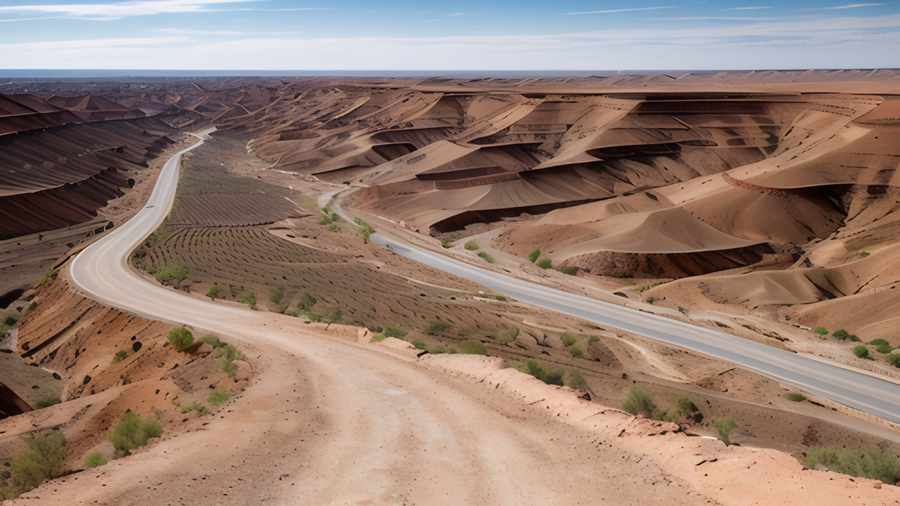
Toksun Gan gorge. The gorge where the road crosses the Tianshan between Turpan and Korla, red beds cut into vertical ribs with the highway on the floor. This is one of Xinjiang notorious wind corridors, gusts arriving without warning; Toksun sits at the mouth and is known for its noodles. There is no shade in the gorge, so go in the morning or late rather than at midday. The rock changes colour with the light, and the same stretch looks different on the way back. The day covers 370 km, cut into two-hour blocks with lunch in a town en route.
On the way. The day also passes the southern Tianshan slopes. The viewpoints are a fair walk apart, so wear comfortable shoes.
Road note: A long transfer day; leave early and stop every two hours to stretch.
Eat: Noodles and grilled meat in the county town, 30 to 45 yuan a head
Sleep: Hotels on the main street of Korla, 150 to 300 yuan, easy parking; book ahead in season.
Tip: There is no signal in the gorge, so save the route offline first.
9 a rest day at Korla (—)
the Bosten reed marsh. The reed marsh cut by channels around Bosten Lake, with boats from several jetties into narrow winding water. At sunset reeds and water share the same colour, and mosquitoes come with it. In high season the car park sits far from the gate, and arriving early saves a long walk. In high season the car park sits far from the gate, and arriving early saves a long walk.
On the way. The day also passes Iron Gate pass, the Lop village. The lakeside road bends often and reeds block the view, so slow before each corner. Nothing on this stretch needs a ticket, and a ten-minute stop where the ground opens up is enough; there is no need to detour for a viewpoint.
Road note: A short day on county roads, narrow but quiet, about an hour.
Eat: Noodles and grilled meat in the county town, 30 to 45 yuan a head
Sleep: Hotels on the main street of a rest day at Korla, 150 to 300 yuan, easy parking; book ahead in season.
Tip: It cools fast by the water, so bring a jacket and repellent, and mind slippery boards.
10 Korla – Kuqa (280 km)
Luntai. Luntai in Bayingolin, an oasis town on the northern rim of the Tarim basin, with the poplar park and the desert highway start to the south. One main street holds fuel, workshops and a few hotels with parking, the last supply point before the sand. This is the last place to top up fuel, water and cash; choices thin out badly beyond here. The bazaar is liveliest towards evening, with grilled meat and fruit sold by weight. The day covers 280 km, cut into two-hour blocks with lunch in a town en route.
On the way. The day also passes Tarim poplars. This is the last place to top up fuel, water and cash; choices thin out badly beyond here.
Road note: Most of the day on the road, long straights, so watch crosswind and changing limits.
Eat: Noodles and grilled meat in the county town, 30 to 45 yuan a head
Sleep: Hotels on the main street of Kuqa, 150 to 300 yuan, easy parking; book ahead in season.
Tip: Draw cash here; not every shop further on takes a card.
11 a rest day in Kuqa (—)
the Tianshan Mystery canyon. A red-bed gorge beside the Duku north of Kuqa, walls high and fissures narrow, walking in like passing between walls. Boardwalks run deep, and water collects after rain. There is no shade in the gorge, so go in the morning or late rather than at midday. The rock changes colour with the light, and the same stretch looks different on the way back.
On the way. The day also passes the Kuqa royal residence, the old town bazaar, the Kucha caves. The rock changes colour with the light, and the same stretch looks different on the way back.
Road note: A short day on county roads, narrow but quiet, about an hour.
Eat: Noodles and grilled meat in the county town, 30 to 45 yuan a head
Sleep: Hotels on the main street of a rest day in Kuqa, 150 to 300 yuan, easy parking; book ahead in season.
Tip: There is no signal in the gorge, so save the route offline first.
12 Kuqa – Aksu (260 km)
the road to the Wensu canyon. The red-bed canyon country north of Wensu in Aksu, where the Tomur canyon is the best known, its walls cut into bastions by water. A gravel stretch leads in, passable slowly in an ordinary car, but not after rain. The rock changes colour with the light, and the same stretch looks different on the way back. There is no shade in the gorge, so go in the morning or late rather than at midday. The day covers 260 km, cut into two-hour blocks with lunch in a town en route.
On the way. The day also passes the southern Tianshan slopes. The gorge narrows the wind and gusts arrive suddenly, so hold on to your hat.
Road note: Most of the day on the road, long straights, so watch crosswind and changing limits.
Eat: Noodles and grilled meat in the county town, 30 to 45 yuan a head
Sleep: Hotels on the main street of Aksu, 150 to 300 yuan, easy parking; book ahead in season.
Tip: There is no signal in the gorge, so save the route offline first.
13 a rest day in Aksu (—)
the Wensu canyon. The Tomur canyon north of Wensu, red beds cut into earth bastions with narrow stretches needing hands and feet. Shuttles and boardwalks serve it, and reaching the inner section takes two or three hours. The gorge narrows the wind and gusts arrive suddenly, so hold on to your hat. The viewpoints are a fair walk apart, so wear comfortable shoes.
On the way. The day also passes the Dolan River wetland, the Kekeya greenbelt. The viewpoints are a fair walk apart, so wear comfortable shoes. Nothing on this stretch needs a ticket, and a ten-minute stop where the ground opens up is enough; there is no need to detour for a viewpoint.
Road note: A short day on county roads, narrow but quiet, about an hour.
Eat: Noodles and grilled meat in the county town, 30 to 45 yuan a head
Sleep: Hotels on the main street of a rest day in Aksu, 150 to 300 yuan, easy parking; book ahead in season.
Tip: There is no signal in the gorge, so save the route offline first.
14 Aksu – Bachu (220 km)
the northern Tarim rim. The oasis belt along the northern rim of the Tarim, from Aksu through Kuqa to Luntai, gravel fans off the Tianshan to the north and sand to the south. The road runs straight, oases arriving in blocks, cotton and orchards behind poplar windbreaks. Phone signal comes and goes, so save the day route and the night stop offline before you leave. Phone signal comes and goes, so save the day route and the night stop offline before you leave. The day covers 220 km, short enough to stop whenever something looks worth it.
On the way. The day also passes Honghai Poplars. The surface is good and the speed signs are far apart; it is easy to drift fast, so slow down at every village.
Road note: Most of the day on the road, long straights, so watch crosswind and changing limits.
Eat: Noodles and grilled meat in the county town, 30 to 45 yuan a head
Sleep: Hotels on the main street of Bachu, 150 to 300 yuan, easy parking; book ahead in season.
Tip: Fill the tank before leaving; do not count on a station out on the gravel.
15 Bachu – Kashgar (240 km)
Honghai Poplars. Wild poplars beside the Yarkand River at Bachu, wrapped around a small reservoir with boardwalks along the water. Late October turns them gold and the reflection beats the trees; summer brings green shade and quiet backwaters. Tracks inside the forest are gravel, so go slow and keep off the shoulder. The forest is big and cut by many tracks, so remember the one you came in on and leave before dark. The day covers 240 km, short enough to stop whenever something looks worth it.
On the way. The day also passes Kashgar oasis. The poplars turn gold in late October, and one week either side changes the colour completely.
Road note: Most of the day on the road, long straights, so watch crosswind and changing limits.
Eat: Noodles and grilled meat in the county town, 30 to 45 yuan a head
Sleep: Hotels on the main street of Kashgar, 150 to 300 yuan, easy parking; book ahead in season.
Tip: Tracks branch everywhere in the forest, so remember your entry and leave before dark.
16 a rest day in Kashgar (—)
the lanes of the Kashgar old town. The earth lanes of the Kashgar old town, gateways, wooden windows, children and coppersmiths packed into narrow alleys. Park outside and walk; ask before photographing doorways and never chase people with a lens. Old-town lanes are narrow, so park on the edge and walk in. The town is small and one main street holds the fuel station, the workshop and the market.
On the way. The day also passes the Id Kah square, the century-old teahouse, the craftsmen bazaar. The bazaar is liveliest towards evening, with grilled meat and fruit sold by weight. Nothing on this stretch needs a ticket, and a ten-minute stop where the ground opens up is enough; there is no need to detour for a viewpoint.
Road note: A short day on county roads, narrow but quiet, about an hour.
Eat: Noodles and grilled meat in the county town, 30 to 45 yuan a head
Sleep: Hotels on the main street of a rest day in Kashgar, 150 to 300 yuan, easy parking; book ahead in season.
Tip: Draw cash here; not every shop further on takes a card.
17 Kashgar – Yecheng (280 km)
Yengisar. A small county south of Kashgar known for hand-made knives, workshops showing forging, quenching and inlay from start to finish. Earth lanes, orchards and the bazaar survive, with few visitors and honest prices. Old-town lanes are narrow, so park on the edge and walk in. The town is small and one main street holds the fuel station, the workshop and the market. The day covers 280 km, cut into two-hour blocks with lunch in a town en route.
On the way. The day also passes Yarkand, Yarkand oasis. The town is small and one main street holds the fuel station, the workshop and the market.
Road note: Most of the day on the road, long straights, so watch crosswind and changing limits.
Eat: Noodles and grilled meat in the county town, 30 to 45 yuan a head
Sleep: Hotels on the main street of Yecheng, 150 to 300 yuan, easy parking; book ahead in season.
Tip: Draw cash here; not every shop further on takes a card.
18 Yecheng – Hotan (250 km)
Yarkand oasis. The oasis around Yarkand and Zepu, farmland and orchards watered by the Yarkand River, walnuts, pomegranates and almonds along the belt. Old towns keep rammed-earth lanes and old mosques, with poplars lined up along the road. Rooms cluster along the main street, and the closer to the centre the easier the parking. Old-town lanes are narrow, so park on the edge and walk in. The day covers 250 km, cut into two-hour blocks with lunch in a town en route.
On the way. The day also passes Hotan oasis. The bazaar is liveliest towards evening, with grilled meat and fruit sold by weight.
Road note: Most of the day on the road, long straights, so watch crosswind and changing limits.
Eat: Noodles and grilled meat in the county town, 30 to 45 yuan a head
Sleep: Hotels on the main street of Hotan, 150 to 300 yuan, easy parking; book ahead in season.
Tip: Draw cash here; not every shop further on takes a card.
19 Hotan – Minfeng (300 km)
Hotan oasis. The oasis below the Kunlun, farmland, walnuts and pomegranates watered by the Yurungkash and Karakash rivers. Old lanes hold bazaars and carpet workshops, the Kunlun passes to the south and the Taklamakan to the north. The town is small and one main street holds the fuel station, the workshop and the market. The town is small and one main street holds the fuel station, the workshop and the market. The day covers 300 km, cut into two-hour blocks with lunch in a town en route.
On the way. The day also passes Keriya, Minfeng. Old-town lanes are narrow, so park on the edge and walk in.
Road note: A long transfer day; leave early and stop every two hours to stretch.
Eat: Noodles and grilled meat in the county town, 30 to 45 yuan a head
Sleep: Hotels on the main street of Minfeng, 150 to 300 yuan, easy parking; book ahead in season.
Tip: Draw cash here; not every shop further on takes a card.
20 Minfeng – Qiemo (300 km)
the edge of the desert highway. The opening stretch of the Tarim desert highway, edged with straw grids and reed barriers holding the sand, with hundreds of kilometres of dune beyond. Fill the tank and carry water before entering, and keep an ordinary car on the sealed road. Carry plenty of water, because visibility drops fast once the wind gets up. Sand is soft, so stay on the sealed road unless you have four-wheel drive. The day covers 300 km, cut into two-hour blocks with lunch in a town en route.
On the way. The day also passes Qiemo oasis. Sand is soft, so stay on the sealed road unless you have four-wheel drive.
Road note: A long transfer day; leave early and stop every two hours to stretch.
Eat: Noodles and grilled meat in the county town, 30 to 45 yuan a head
Sleep: Hotels on the main street of Qiemo, 150 to 300 yuan, easy parking; book ahead in season.
Tip: Never take one vehicle deep into sand; carry water and a tow rope.
21 Qiemo – Ruoqiang (280 km)
the lower Cherchen River. The lower Cherchen River between Qiemo and Qiemo county seat and Ruoqiang, coming off the Kunlun and finally fading into the marsh by Taitema Lake. Poplar, tamarisk and dunes line it, with little traffic and tracks of wild camel. In high season the car park sits far from the gate, and arriving early saves a long walk. Mosquitoes are thick near water, so bring long sleeves and a repellent. The day covers 280 km, cut into two-hour blocks with lunch in a town en route.
On the way. The day also passes Ruoqiang oasis. Wind at the water is stronger than in town and the evening cools fast, so keep a jacket within reach.
Road note: Most of the day on the road, long straights, so watch crosswind and changing limits.
Eat: Noodles and grilled meat in the county town, 30 to 45 yuan a head
Sleep: Hotels on the main street of Ruoqiang, 150 to 300 yuan, easy parking; book ahead in season.
Tip: It cools fast by the water, so bring a jacket and repellent, and mind slippery boards.
22 Ruoqiang – Yuli (340 km)
Taitema Lake. The terminal lake north of Ruoqiang where the Tarim and Cherchen finally meet, its surface rising and falling with the year. Reeds and salt flats surround it, a road running along the shore, windy and full of birds. The lakeside road bends often and reeds block the view, so slow before each corner. The lakeside road bends often and reeds block the view, so slow before each corner. The day covers 340 km, cut into two-hour blocks with lunch in a town en route.
On the way. The day also passes the poplar corridor, Tarim River. The lakeside road bends often and reeds block the view, so slow before each corner.
Road note: A long transfer day; leave early and stop every two hours to stretch.
Eat: Noodles and grilled meat in the county town, 30 to 45 yuan a head
Sleep: Hotels on the main street of Yuli, 150 to 300 yuan, easy parking; book ahead in season.
Tip: It cools fast by the water, so bring a jacket and repellent, and mind slippery boards.
23 Yuli – Korla (50 km)
the lower Tarim oasis. The green corridor of the lower Tarim, poplar, tamarisk and fields between two sand ridges. This is the classic oasis-to-desert edge of the south: straight road, plain scenery, and beautiful light at dusk. The surface is good and the speed signs are far apart; it is easy to drift fast, so slow down at every village. Phone signal comes and goes, so save the day route and the night stop offline before you leave. The day covers 50 km, short enough to stop whenever something looks worth it.
Nothing on this stretch needs a ticket, and a ten-minute stop where the ground opens up is enough; there is no need to detour for a viewpoint.
Road note: A short day on county roads, narrow but quiet, about an hour.
Eat: Noodles and grilled meat in the county town, 30 to 45 yuan a head
Sleep: Hotels on the main street of Korla, 150 to 300 yuan, easy parking; book ahead in season.
Tip: Fill the tank before leaving; do not count on a station out on the gravel.
24 Korla – Turpan (370 km)
Gan gorge. A red-bed gorge on the southern flank of the Tianshan, walls banded red and grey, soft rock hollowed into rows of holes by wind. The highway runs through it and viewpoints show the whole line of the valley; light is hard at midday and best towards evening. The rock changes colour with the light, and the same stretch looks different on the way back. The rock changes colour with the light, and the same stretch looks different on the way back. The day covers 370 km, cut into two-hour blocks with lunch in a town en route.
On the way. The day also passes Toksun. There is no shade in the gorge, so go in the morning or late rather than at midday.
Road note: A long transfer day; leave early and stop every two hours to stretch.
Eat: Noodles and grilled meat in the county town, 30 to 45 yuan a head
Sleep: Hotels on the main street of Turpan, 150 to 300 yuan, easy parking; book ahead in season.
Tip: There is no signal in the gorge, so save the route offline first.
25 Turpan – Urumqi (190 km)
Dabancheng Wind Gap. A gap between the Tianshan and Bogda ranges southeast of Urumqi where wind blows all year, with wind walls and turbines along the old pass. Daban town sits below it, the place in the famous song, one short street and a few courtyards. Be patient behind trucks on the climb and never pull out on a bend. Brakes run hot after a long descent, so find flat ground and let them cool before stopping. The day covers 190 km, short enough to stop whenever something looks worth it.
On the way. The day also passes the salt-lake desert. Be patient behind trucks on the climb and never pull out on a bend.
Road note: Half a day, mostly sealed road, with the slowest kilometres at either end of the towns.
Eat: Noodles and grilled meat in the county town, 30 to 45 yuan a head
Sleep: Hotels on the main street of Urumqi, 150 to 300 yuan, easy parking; book ahead in season.
Tip: Check the weather before the pass and do not force it in rain or snow.
Tickets and opening hours
| Site | Ticket | Hours |
|---|---|---|
| the Hami royal residence | See ticket office | Check the gate on the day |
| the Tianshan temple | See ticket office | Check the gate on the day |
| Barkol Lake | See ticket office | Check the gate on the day |
| Barkol old town | See ticket office | Check the gate on the day |
| Barkol grassland | See ticket office | Check the gate on the day |
| the Yiwu valley | See ticket office | Check the gate on the day |
| the Yiwu poplar forest | See ticket office | Check the gate on the day |
| the Bosten reed marsh | See ticket office | Check the gate on the day |
| Tarim poplars | See ticket office | Check the gate on the day |
| the Tianshan Mystery canyon | See ticket office | Check the gate on the day |
Tickets and shuttle buses are priced separately and change with season and holidays, so confirm at the gate; guides, horses and boats are extra.
Six things to know on the road
- Foreign vehicles must be declared to customs by a licensed travel agency. Private cars cannot clear the border on their own; that is the procedure, not an option.
- The temporary plate is valid three months. Do not change the route filed at entry without re-filing it.
- Some frontier districts in Xinjiang need prior approval, and Xinjiang to Tibet cannot be crossed directly: you must go around via Golmud on the G109.
- Fuel is sold against ID, so keep the vehicle registration and licence within reach; stations can be 200 km apart.
- Speed limits differ sharply between expressway and national road, and average-speed cameras are everywhere, so slow down at every sign.
- At checkpoints, slow early and hand over passport, licence, registration and temporary plate together in one folder.
When to come
June to October, best from late September into mid-October when both ends are comfortable and the dust is light.
How to extend it
To stretch it further, put the north at the front and add five to seven days. The Aksu day can go out to the Wensu canyon.
Contact and quote
This route can be adjusted to your dates, group size and vehicle. The quote covers customs declaration, temporary plate, route filing and port handling, and excludes fuel, tickets, rooms and meals. Send the port and date you plan to enter and we will confirm what is workable under the current rules.
WhatsApp: +86 13759155671 Email: [email protected]